
UPSC CURRENT AFFAIRS — 28 OCTOBER 2026
1. AVYAY: A Framework for Dignified Ageing
(SOCIAL JUSTICE) (PIB) The Social Justice Ministry’s Atal Vayo Abhyuday Yojana (AVYAY), an umbrella scheme launched in 2021 that subsumed the National Action Plan for Senior Citizens, is in focus as India ages and family support weakens. In 2026–27, ₹77.98 crore in grants was released to 755 projects for the quarter ending September 2026.
Why Elder Care Matters
Census 2011 counted 10.38 crore people aged 60 and above (5.11 crore men and 5.27 crore women), a number projected to reach about 23 crore by 2036 (PIB). Urbanisation, migration and nuclear families are weakening traditional care, so demand for geriatric and community support is rising (Senior Citizens and Vulnerable Groups).
Article 41 of the Constitution already directs the State to provide public assistance in old age, within its economic capacity.
Components of AVYAY
| Component | What it does |
| IPSrC | Integrated Programme for Senior Citizens: grants to NGOs, Panchayati Raj Institutions and local bodies for senior citizen homes, continuous care homes, mobile medicare units and physiotherapy clinics |
| SAPSrC | State Action Plan for Senior Citizens: aid to States and UTs for local plans; up to 20% of funds may go to approved State-specific initiatives |
| RVY | Rashtriya Vayoshri Yojana (2017): assistive devices for age-related disability, distributed through camps and ALIMCO-linked kendras |
| RRTCs | Regional Resource and Training Centres: training, research and monitoring; each receives about ₹19.58 lakh a year under IPSrC |
Reported reach: 764 senior citizen homes, 13 continuous care homes, 17 mobile medicare units and 3 physiotherapy clinics; RVY has benefited over 10.45 lakh seniors with about 55.88 lakh devices.
Digital and Support Initiatives
- Elderline 14567: national helpline since October 2021, with over 8.66 lakh actionable calls.
- JEEVAN app and SHATAYU dashboard (both May 2026): scheme information, one-tap helplines, and a database of 30,151 trained caregivers (23,334 women, 6,817 men).
- SAGE: equity support of up to ₹1 crore for elder-care start-ups, growing the Silver Economy.
- SCOPE and PM-SPECIAL: productive engagement for seniors, and free caregiver training.
- Intergenerational bonding: an MoU on 1 September 2026 with Ramakrishna Math and Mission for 200 pilot schools.
Guiding Principles and Monitoring
- Ageing with dignity and ageing in place: care at home and in the community wherever possible.
- District committees under the Collector select beneficiaries; a Project Monitoring Unit inspects projects.
- The e-Anudaan portal, biometric attendance and live CCTV feeds improve accountability.
The next test is quality of care in small towns and rural areas, and fair access for poor elderly women (Vulnerable Sections).
📖 Read More: Senior Citizens, Persons with Disabilities, LGBTQIA+ Communities and Minorities • Vulnerable Sections and Social Justice • Health and Nutrition
2. Double Fortified Salt: A Ready Answer to Anaemia
(SOCIAL JUSTICE) (TH) An opinion piece by Marthi Venkatesh Mannar argues that the new 7X7X7 Anaemia Mukt Bharat (AMB) strategy should lean on Double Fortified Salt (DFS), ordinary salt enriched with both iodine and iron, as an affordable population-scale answer to iron-deficiency anaemia.
Scale of the Problem
In NFHS-5 (2019–21), 57% of women aged 15–49 were anaemic, and 67.1% of children aged 6–59 months were affected. Anaemia drives maternal risk, poor learning and a cycle of undernutrition (Health and Nutrition).
What Is DFS?
| Feature | Detail |
| Iodine | Prevents goitre and intellectual disability (salt iodisation) |
| Iron | Combats microcytic iron-deficiency anaemia |
| Why salt | Eaten daily in predictable amounts across income groups, so compliance is easier than with iron-folic acid pills |
| Stability | Iron compounds such as encapsulated ferrous fumarate or ferric pyrophosphate limit discolouration and iodine loss |
| Platform | Universal Salt Iodisation: around 95% of households already use iodised salt |
| Reach so far | The author estimates DFS already reaches about 76 million people in four States through safety-net programmes |
| Cost | The author puts it at ₹14–₹20 per person a year, with a benefit-cost ratio of 4.2:1 |
Institutional Framework
- FSSAI has notified standards for DFS, including the iron compound used.
- The author states that the Government mandates DFS in PM POSHAN school meals and in ICDS.
- AMB’s 7X7X7 design covers seven beneficiary groups, seven interventions and seven institutional mechanisms.
Challenges
- Uneven PDS adoption: the Public Distribution System reaches roughly 80 crore people, but DFS supply depends on State funding.
- Taste and colour: early, unencapsulated products darkened food and reduced acceptance.
- Genetic blood disorders: unscreened iron can overload people with thalassaemia or sickle-cell disease.
- Price and access: branded DFS costs more than iodised salt in open markets.
- Sodium trade-off: campaigns must promote DFS yet urge lower total salt for hypertension.
Way Ahead
Fortify at source ➜ Distribute through PDS and meals ➜ Screen for blood disorders ➜ Communicate with households
- Make DFS an eligible commodity under the National Food Security Act with central funding.
- Concentrate production in coastal salt hubs for uniform quality control.
- Mandate encapsulation and moisture-proof packs; link distribution to sickle-cell and thalassaemia screening.
- Use ASHA and Anganwadi workers for cooking demonstrations that counter myths about colour and taste.
📖 Read More: Health and Nutrition • Poverty and Hunger • National Food Security Act, 2013
3. Janjatiya Gaurav Pakhwada 2026
(SOCIAL JUSTICE) (PIB) The Tribal Affairs Ministry will observe Janjatiya Gaurav Pakhwada from 1 to 15 November 2026, ending on Janjatiya Gaurav Diwas (15 November), the birth anniversary of Birsa Munda.
Background
- Birsa Munda led the Munda rebellion (Ulgulan, 1899–1900) against land alienation and forced labour, and died in custody in 1900 (Tribal Uprisings).
- The Government declared 15 November as Janjatiya Gaurav Diwas in 2021; his 150th anniversary was marked as Janjatiya Gaurav Varsh (2024–25).
What Is Planned
| Theme | Initiative |
| Projects | Over 300 projects: 228 inaugurations and 74 foundation stones, including a Tribal Research Institute in Itanagar and the Ropuiliani Tribal Freedom Fighter Museum in Mizoram |
| Health data | Jan-HIT portal, built with ICMR: proposed as India’s first tribe-disaggregated health data platform, covering 20 States |
| Forest rights | National FRA Digital Platform to digitise claims under the Forest Rights Act, 2006, from Gram Sabha application to digitally signed title |
| Language and culture | National Tribal Literary Festival; Adi Vaani workshop at IIT Delhi for a digital repository of tribal languages |
| Enterprise | Rani Durgavati Adivasi Mahila Sammelan for 500 tribal women entrepreneurs from 30 States/UTs |
| Outreach | Dharti Aaba Janbhagidari Abhiyan: about 1.54 lakh Adi Karmayogi volunteers across 76,963 villages |
| Health and livelihood | Camps for PVTGs, training for traditional healers, scholarships, conservation of 200–300 medicinal plant species |
Over 160 activities are planned across 19 States and UTs, from cultural festivals to livelihood camps.
Constitutional Anchors
- Articles 244 and 342, with the Fifth and Sixth Schedules, frame tribal administration and the notification of Scheduled Tribes (Tribal Area Development).
- Article 46 directs the State to promote the educational and economic interests of Scheduled Castes and Scheduled Tribes.
Digitised forest-rights titles and disaggregated health data would help to target schemes for PVTGs more precisely, linking recognition of heritage with rights (Forest Rights).
📖 Read More: Tribal Area Development • Particularly Vulnerable Tribal Groups • Tribal Uprisings in British India • Anti-Colonial Tribal Movements
4. States Urged to Borrow Prudently
(ECONOMICS) (TH) Addressing the 36th Conference of State Finance Secretaries on 27 October 2026, RBI Governor Sanjay Malhotra urged States to adopt prudent borrowing and efficient cash management and to protect the quality of spending. The conference drew finance secretaries of 27 States and three Union Territories.
What Is Prudent Borrowing?
- Debt is kept within the ability to repay, and spent mainly on capital expenditure that creates future income (Fiscal Policy).
- This is the “golden rule” of public finance: do not borrow for routine revenue spending.
- Cash management means timing borrowing to real cash gaps, avoiding idle balances that cost interest.
State Finances at a Glance (Background Figures)
| Indicator | Reported position |
| Aggregate State debt | 29.2% of GDP at end-March 2026, above the 20% limit advised by the FRBM Review Committee |
| Gross fiscal deficit | Budgeted at 3.3% of GDP for 2025–26; 16 States budgeted above 3% |
| Committed spending | Over 60% of revenue receipts go to interest, salaries, pensions and subsidies |
| Stressed States | Punjab and West Bengal near or above 40% of GSDP |
| Prudent States | Gujarat, Maharashtra and Odisha within the 20% limit |
These figures come from background analysis, not from the linked report, which covers the Governor’s speech; check them against RBI’s annual study of State budgets before quoting. States account for about two-thirds of public spending, so their capital expenditure matters for growth.
Problem Areas
- Off-budget borrowing through State enterprises and special-purpose vehicles, often with guarantees, escapes FRBM limits and legislative scrutiny.
- Revenue over capital: capital spending carries a high multiplier (about 2.45, as reported), unlike subsidies and waivers.
- DISCOM guarantees are contingent liabilities that can fall on State budgets.
- Bond-yield spikes from uncoordinated borrowing calendars raise costs (crowding out).
Constitutional and Policy Frame
- Article 293: a State may borrow within India on the security of its Consolidated Fund within legislative limits; under 293(3), a State indebted to the Union needs Union consent for fresh loans.
- The Union now counts State off-budget borrowing against these limits.
- SASCI offers 50-year interest-free loans for State capital investment, a major support for State capex (Government Debt).
Way Forward
- The Governor asked States to onboard the Unified Lending Interface and use programmable CBDC for direct benefit transfers to stop leakage (TH).
- Use State Level Bankers’ Committees to monitor credit and priority-sector bottlenecks.
- Follow the FRBM glide path and use RBI’s new booklet, the Compendium on Cash and Debt Management for State Governments, released at the conference; States were also reviewed on the Benchmark Issuance Strategy.
- Set up an independent fiscal council, as the Finance Commissions and the N. K. Singh-led FRBM Review Committee advised (Finance Commission).
📖 Read More: Fiscal Policy • Government Debt in India • Public Expenditure Management • Finance Commission of India
5. Jio Platforms Lists After a Record IPO
(ECONOMICS) (FP) Jio Platforms made its stock-market debut on 28 October 2026 after a ₹30,188-crore (about $3.2 billion) initial public offering (IPO) that drew about $77 billion in bids and was subscribed 22.2 times. The issue price was ₹1,119 a share, the top of the ₹1,065–₹1,119 band, valuing the company near ₹10.3 lakh crore.
What Is an IPO?
The first sale of shares by an unlisted company to the public, through fresh shares, an Offer for Sale (OFS) by existing holders, or both. The company then trades on exchanges (Primary Market).
How an IPO Works
Merchant bankers appointed ➜ DRHP filed with SEBI ➜ SEBI clearance and RHP ➜ Anchor and public bidding ➜ Allotment ➜ Listing
- The Draft Red Herring Prospectus discloses business, risks and use of funds; the final RHP adds dates and the price band.
- Price is found through book building; funds stay blocked in investors’ accounts under ASBA until allotment.
- Oversubscribed retail and non-institutional quotas are allotted by lottery.
| Quota | Investors |
| QIB | Qualified Institutional Buyers such as mutual funds and insurers |
| NII | Non-Institutional Investors (high-net-worth) |
| RII | Retail Individual Investors |
Eligibility Under SEBI’s ICDR Regulations, 2018
| Route | Conditions |
| Profitability (Reg. 6(1)) | Net tangible assets of at least ₹3 crore in each of the preceding three full years (not more than 50% in monetary assets); average operating profit of at least ₹15 crore over the three best of the preceding five years; net worth of at least ₹1 crore in each of three years |
| Alternative (Reg. 6(2)) | Book-building issue with at least 75% of the net offer to QIBs, for firms not meeting profit tests |
Significance
- Channels household savings into productive companies and deepens the capital market.
- Gives investors dividends and capital gains, and gives promoters and venture funds an exit.
- Mandatory disclosure under SEBI improves governance and investor confidence.
📖 Read More: Capital Market • Primary Market Instruments • SEBI
6. IMEC: A Corridor Beyond Chokepoints
(INTERNATIONAL RELATIONS) (AIR) External Affairs Minister S. Jaishankar said at the Raisina Middle East event in Abu Dhabi that the India–Middle East–Europe Economic Corridor (IMEC) is already shaping how countries in the region think about connectivity, as competition rises and new chokepoints emerge
What Is IMEC?
A proposed multimodal corridor linking India, the Middle East and Europe through shipping, rail, energy pipelines and digital links. It was announced at the 2023 G20 Summit in New Delhi through a memorandum of understanding, and is not yet a binding treaty.
| Feature | Detail |
| Signatories (8) | India, the US, Saudi Arabia, the UAE, France, Germany, Italy and the European Union |
| Link | Tied to the G7’s PGII (2022); seen as an alternative to China’s Belt and Road Initiative |
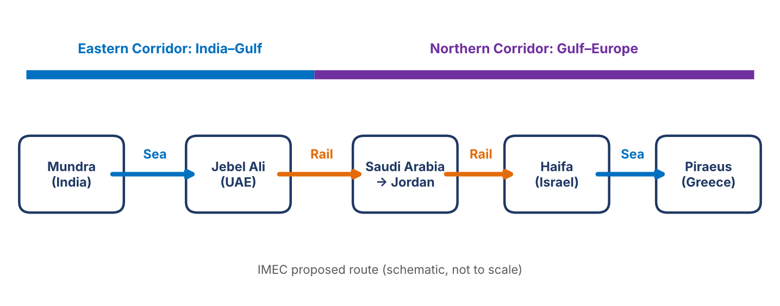
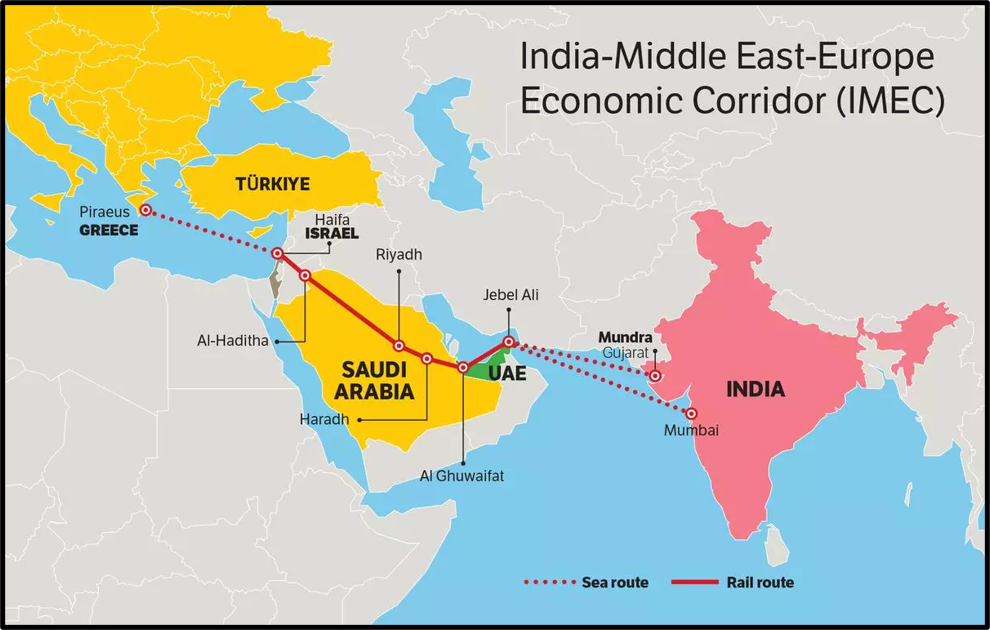
| Route | India → UAE → Saudi Arabia → Jordan → Israel → Europe |
| Ports | Mundra (India), Jebel Ali (UAE), Haifa (Israel), Piraeus (Greece) |
Two Corridors
- Eastern Corridor: India to the Arabian Gulf by sea.
- Northern Corridor: Gulf to Europe by rail and sea.
Other Connectivity Projects Involving India
| Project | Link |
| INSTC | Ship, rail and road network between India, Iran, Russia, Central Asia and Europe |
| Kaladan Project | Kolkata Port to Sittwe Port (Myanmar) by sea, river and road, serving India’s Northeast |
| Trilateral Highway | Moreh (India) to Mae Sot (Thailand) through Myanmar |
Why It Matters
- Offers an alternative to trade lanes disrupted by West Asian instability (India and West Asia Policy).
- Deepens ties with Gulf partners and Europe (India and Europe).
- Success depends on regional stability, financing and agreement among many states.
📖 Read More: India and West Asia Policy • India and Europe • India and South-East Asia Policy
7. Liechtenstein: India’s New Alpine Partner
(INTERNATIONAL RELATIONS) (PTI) The Prime Minister held talks on 27 October 2026 with Hereditary Prince Alois of Liechtenstein at Hyderabad House during his 25–28 October visit, which aims to deepen cooperation in trade and investment and in science, technology and innovation.
Quick Profile
| Item | Detail |
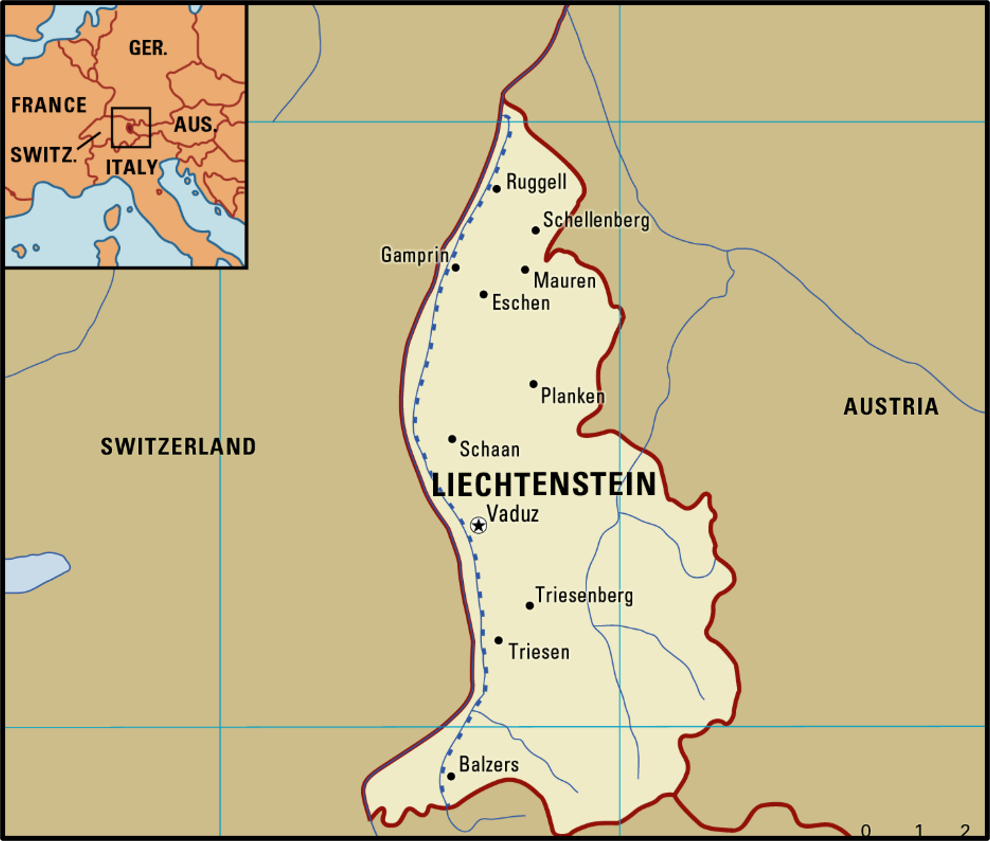
| Capital | Vaduz |
| State | Constitutional monarchy; Hereditary Prince Alois performs head-of-state duties as regent |
| Parliament | Unicameral Landtag; Prime Minister Brigitte Haas heads the government |
| Location | Upper Rhine valley in the Alps, between Switzerland and Austria |
| Size | About 160 sq km; highest point Grauspitz (2,599 m) |
| Currency | Swiss franc |
What Makes It Distinct
- One of only two doubly landlocked countries: every neighbour is itself landlocked (the other is Uzbekistan).
- Customs union with Switzerland since 1923 and an open border.
- No army since 1868; neutral, with police for internal security.
- A rich economy built on precision manufacturing, pharmaceuticals and finance.
Link to India
- A member of EFTA and the European Economic Area.
- The India–EFTA Trade and Economic Partnership Agreement, which includes Liechtenstein, entered into force on 1 October 2025 (EFTA communiqué).
- Strengthens India’s engagement with Europe beyond the EU (India and Europe).
📖 Read More: India and Europe • India and West Asia Policy
8. Garuda Shakti: India–Indonesia Special Forces Drill
(INTERNAL SECURITY) (PIB) The 11th edition of the India–Indonesia joint special forces exercise GARUDA SHAKTI began at Banyuwangi, Indonesia.
Exercise at a Glance
| Feature | Detail |
| Nature | Bilateral special forces exercise, hosted alternately by the two countries |
| Dates | 27 October to 6 November 2026 |
| Indian force | Parachute Regiment (Special Forces), Indian Army |
| Indonesian force | Indonesian Special Forces |
| Aim | Interoperability, mutual understanding and sharing of counter-terrorism and counter-insurgency experience |
Training Content
- Jungle warfare, obstacle crossing, combat marksmanship and mountaineering.
- Air assault, close-quarter battle and exchange of expertise on weapons and equipment.
- A final validation exercise to test endurance, coordination and readiness.
Strategic Meaning
- Strengthens defence ties with a key Indo-Pacific partner (India and Indonesia Relations).
- Indonesia sits beside the Malacca and Sunda Straits, vital maritime chokepoints.
- Supports India’s engagement with ASEAN through defence cooperation.
Other India–Indonesia exercises include Samudra Shakti (naval) and IND-INDO CORPAT (coordinated naval patrol).
📖 Read More: India and Indonesia Relations • ASEAN • Armed Forces and Internal Security
9. K9 Vajra-T: Over 300 More Howitzers
(INTERNAL SECURITY) (BS) On 26 October 2026 the Defence Ministry granted in-principle approval for over 300 more K9 Vajra-T self-propelled howitzers, at an estimated cost above ₹20,000 crore. The Army already operates 100 guns and has another 100 on order (December 2024); the new buy would build a fleet of 500, or 25 regiments of 20 guns.
About the Gun
| Feature | Detail |
| Type | 155 mm, 52-calibre tracked self-propelled howitzer |
| Maker | Larsen & Toubro (Hazira, Gujarat) with Hanwha Aerospace of South Korea, based on the K9 Thunder |
| Range | Up to 40 km with standard shells; up to 50 km with extended-range projectiles |
| Fire rate | Burst of 6–8 rounds a minute |
| Mobility | “Shoot-and-scoot”: fires, then moves within minutes to avoid counter-battery radar |
| Protection | All-welded steel hull against shell splinters, mines and small arms |
| Weight and speed | About 50 tonnes; road speed about 67 km/h; crew of five |
| Cold weather | Winterisation kits; a full regiment has operated in eastern Ladakh |
Indigenisation
- Reports put indigenisation by value above 50% at the programme level; L&T says over 80% of physical work packages and sub-assembly manufacturing are done in India.
- The Defence Ministry has set a target of more than 70% indigenous content for the new batch (Make in India).
Where AoN Fits
AoN by the Defence Acquisition Council ➜ Request for Proposal ➜ Trials ➜ Cost negotiation ➜ Cabinet Committee on Security ➜ Contract
AoN is only the first approval; it states that a purchase is needed, not that a contract exists.
Significance
- Adds mobile, tracked firepower along the LAC and LoC against armoured formations (Border Security).
- Deepens public–private defence manufacturing and domestic armoured vehicle supply chains (Armed Forces and Internal Security).
📖 Read More: Armed Forces and Internal Security • Border Security • Make in India Initiative
10. Democratising AI for Inclusive Growth
(SCIENCE AND TECHNOLOGY) (IE) A column by Neelkanth Mishra and Somik Lall argues that India’s Digital Public Infrastructure (DPI) experience, such as UPI and India Stack, shows how technology, institutions and market incentives can cut costs and broaden access to AI.
Economic Potential
- AI could add about USD 1.7 trillion to India’s economy by 2035, as reported.
- Cheap, narrow, “good-enough” AI suits MSMEs for bookkeeping, inventory and quality checks (MSME productivity).
- NITI Aayog is cited as seeing up to 4 million AI jobs by 2031, with roles such as AI trainers and ethics specialists.
- About 490 million informal workers, roughly 90% of the workforce, can gain from advisory, skilling and market access.
- AI works as a co-pilot, for example TB screening tools from Wadhwani AI supporting health workers.
Challenges
| Challenge | What it means |
| Entry-level jobs | Task automation shrinks routine roles first, squeezing fresh graduates |
| Water footprint | Data centres use about 150 billion litres a year, projected above 358 billion by 2030; over 70% of capacity is in water-stressed cities |
| Concentration | Chips, compute, capital and talent sit with a few Western firms |
| Complements gap | Without power, connectivity, devices and local-language data, AI favours the urban elite |
| Pilot-to-scale gap | Weak financing, ownership and impact evaluation stall pilots |
DPI Lessons for AI
Open, interoperable technology ➜ Public rails, private innovation ➜ Low-cost, high-volume markets
- Technology: open models for Indian languages, such as Bhashini.
- Institutions: public compute (AIRAWAT) and data governance, with private firms building services.
- Markets: subsidised rails and interoperability push costs towards zero (Digital Payment Infrastructure, Digital Infrastructure).
Measures Needed
- Make zero-liquid-discharge and reclaimed water mandatory for data centres, with approvals tied to local carrying capacity (Water Conservation).
- Operationalise the IndiaAI Mission, approved with an outlay of ₹10,371.92 crore in March 2024 (report), for subsidised GPU access.
- Expand AI Kosha, which hosts over 5,500 non-personal datasets, to cut dependence on foreign data.
- Deploy voice bots in local dialects for farm and weather advice; procure proven domestic AI health tools.
- Build portable social protection for gig and informal workers, and AI labs in Tier-2 and Tier-3 cities.
- Apply safe-and-trusted AI checklists against bias and deepfakes (AI Governance, Data Localisation and Privacy).
📖 Read More: Artificial Intelligence • Governance and Artificial Intelligence • Digital India Programme • Data Localisation and Privacy Issues
11. CCUS: India’s Bet on Carbon Capture
(ENVIRONMENT) (PIB) India is strengthening its Carbon Capture, Utilisation and Storage (CCUS) ecosystem through research, demonstration projects and a ₹20,000-crore initiative in Union Budget 2026–27 to decarbonise hard-to-abate industries and support the 2070 net-zero goal.
What Is CCUS?
Technologies that capture CO₂ from industrial or energy emissions, then either use it in products or store it underground. CCS only stores; CCU also uses the gas.
Capture ➜ Transport by pipeline or ship ➜ Utilisation or geological storage
| Route | How it works |
| Utilisation | CO₂ becomes building materials, methanol, polymers, fuels or chemicals |
| Geological storage | Injection into depleted oil and gas fields, deep saline aquifers or basalt |
| Mineralisation | CO₂ reacts with minerals to form stable carbonates for construction |
| Enhanced oil recovery | CO₂ pushes out more oil; climate benefit depends on permanent storage |
| Biological use | Algae cultivation for biofuels and biomass |
Why It Matters
- Steel, cement, refineries, chemicals, fertilisers and power may emit nearly 2,300 million tonnes a year by 2030, as reported.
- Electrification alone cannot remove process emissions from these sectors (Pollution from Industries).
- Captured CO₂ supports blue hydrogen, made from fossil fuels with capture, alongside green hydrogen from electrolysis (Hydrogen Economy).
- Retrofits let existing power and industrial plants cut emissions without early closure.
Projects and Pipeline
| Initiative | Detail |
| IIT Bombay pilot | India’s first integrated pilot, inaugurated May 2026: up to 3 tonnes of CO₂ a day converted to carbonates; drilling planned in Deccan Traps basalt |
| Cement testbeds | Five CCU testbeds launched by DST in May 2025 through public–private partnership |
| Coal gasification | IIT Delhi–Thermax and CSIR-IICT–BHEL pilots for methanol and DME |
| Project pipeline | As of April 2026: 3 operating, 6 under execution, 16 proposed |
Policy Support
- Union Budget 2026–27: ₹20,000 crore over five years across power, steel, cement, refineries and chemicals.
- DST roadmap (2025) names the Gujarat coast, the Odisha–Jharkhand belt and the Northeast for CCUS clusters.
- NITI Aayog framework (2022) promotes shared-infrastructure hubs; National CCUS Centres (2022) are at IIT Bombay and JNCASR.
- International research ties include ACT, CETP and Mission Innovation (Climate and Environment Diplomacy).
CCUS supports India’s Panchamrit pledges, but costs, storage mapping and monitoring of leaks will decide scale (Impact of Global Warming).
📖 Read More: Hydrogen Economy • Pollution from Industries • Impact of Global Warming • Climate and Environment Diplomacy
12. A New Deep-Sea Electric Ray From the Arabian Sea
(ENVIRONMENT) (TP) Scientists of the Zoological Survey of India described a new deep-sea electric ray, the Arabian Black Electric Ray (Tetronarce ramanamurthyi), from the south-eastern Arabian Sea.
Species Profile
| Feature | Detail |
| Group | Cartilaginous fish of family Torpedinidae, genus Tetronarce |
| Habitat | Sea floor of the deep continental shelf and upper slope off south-western India |
| Name | Honours M. V. Ramana Murthy, Mission Director of the Deep Ocean Mission |
| Look | Dark bluish-black to brown upper surface; flattened disc wider than long |
| Genes | 2.2–6.7% divergence from other Tetronarce species in mitochondrial COI and ND2 sequences |
Key Characteristics
- Paired kidney-shaped electric organs of modified muscle give shocks for defence and capturing prey.
- Spiracles behind the eyes lack fleshy papillae; they let the ray breathe while resting on muddy bottoms.
- Its electric organs are smaller than those of related rays.
Significance
- First confirmed record of Tetronarce in the northern Indian Ocean, filling gaps in its range and evolution.
- Shows the value of the Deep Ocean Mission and of checking trawl bycatch, which can reveal unknown deep-sea species.
- Better knowledge is the first step in conserving vulnerable deep-sea life (Biodiversity Conservation).
📖 Read More: India’s Deep Ocean Mission • Biodiversity Conservation • Introduction to Marine Resources
13. Decoding the Genetics of Personality
(SCIENCE AND TECHNOLOGY) (TH) A study in Nature found no single “personality gene”: personality has a biological basis, but individual genetic variants have tiny effects compared with the combined effect of many variants and the environment.
Key Terms
- Big Five: the five broad traits studied: openness, conscientiousness, extraversion, agreeableness and neuroticism.
- GWAS: scans genomes of many people to link small DNA differences with a trait.
- Polygenic index: a score that adds up the effects of many variants.
What the Study Found
| Finding | Detail |
| Scale | Data from up to 1.14 million participants across 46 cohorts; roughly 1,250 tiny DNA variations linked to traits |
| Architecture | Traits are spread across the genome, not tied to one gene or one brain chemical |
| Health links | Higher conscientiousness goes with lower body mass index; neuroticism with psychiatric disorders |
| Family design | Comparing siblings with shared homes but different DNA separated genetic effects |
| Inheritance | Parent-to-child transfer through environment is neither strong nor straightforward |
Limits and the Way Ahead
- A person’s DNA says little about their own personality, though population data help psychology and social science.
- Genomic databases are dominated by European-like genomes, so predictions are weaker for other ancestries.
- Experts suggest sequencing families with extreme behaviours; in India, NCBS and NIMHANS (Bengaluru) pioneer this for psychiatric conditions.
- Ethical care is needed so scores are not used for discrimination or profiling (Biotechnology in Healthcare, Heredity).
📖 Read More: Biotechnology in Healthcare • Heredity • Emerging Technology and Indian Society
14. Food Colours: What Is Banned, What Is Allowed
(SOCIAL JUSTICE) (IE) Uttar Pradesh’s Food Safety and Drug Administration issued guidelines against prohibited industrial dyes in street foods, and limits on permitted colours.
Food Colouring
Any dye or pigment added to restore or improve the colour of food. Natural colours come from beetroot, turmeric or paprika; synthetic colours are food-grade chemicals allowed only in listed categories and doses.
| Status | Colours |
| Prohibited (illegal) | Rhodamine B, Metanil Yellow, Malachite Green, Sudan dyes (I–IV), Butter Yellow, Auramine, Orange II |
| Permitted within limits | Tartrazine, Sunset Yellow FCF, Carmoisine, Ponceau 4R, Erythrosine, Brilliant Blue FCF, Fast Green FCF, Indigo Carmine |
Legal Framework
- Food Safety and Standards Act, 2006 penalises adulterated food; FSSAI sets standards.
- FSS (Food Products Standards and Food Additives) Regulations, 2011 list permitted colours by category, with a general cap of 100 mg/kg for categories such as sweets and bakery items (up to 200 mg/kg for canned or glazed cherries).
Key Rules
- No synthetic colours in cooked foods such as dal, biryani, curries, fries, bread and chutneys.
- None in unprocessed foods such as milk, paneer, fruit, vegetables, juices, spices, pulses, honey and infant formula.
- Permitted colours only in specified categories, never beyond them.
- Precise digital weighing, licensed suppliers, batch identification and purchase invoices to ensure traceability.
Health Risks
- Illegal dyes such as Rhodamine B and Sudan dyes carry carcinogenic and liver or kidney toxicity risks.
- Permitted dyes such as tartrazine and carmoisine can trigger hives and asthma in sensitive people.
- Children eating coloured snacks, cotton candy and ice lollies are most exposed (Health and Nutrition, Food Processing Industry).
📖 Read More: Health and Nutrition • Food Processing Industry
15. The AI Social Paradox: Better Words, Weaker Bonds?
(ETHICS) AI tools can help people express hard feelings, yet leaning on them may thin the human connection those words are meant to carry. This note treats the AI social paradox as a case for GS Paper IV and the Essay.
The Paradox
Imagine a friend who has lost her job. A polished, empathetic reply drafted by a chatbot arrives within seconds, yet it feels distant because it lacks shared memory. Communication improved; connection did not.
| Gain | Risk |
| Helps shy or anxious people begin hard conversations | Weaker practice in handling awkward moments |
| Offers new perspectives and gentler wording | Over-reliance dulls independent judgement |
| Fluent, error-free messages | Words may feel generic, not personal |
Social skills are built through misunderstandings, disagreement and uncertainty. If AI removes these, people lose chances to practise them.
Ethical Lens
- Emotional intelligence: its core parts, self-awareness, self-regulation, motivation, empathy and social skill, grow through use.
- Authenticity: real relationships need vulnerability, active listening and trust, not only a good script.
- Responsibility: a machine can imitate empathy; the human still owns the care.
- Honesty: disclosing AI help respects the person receiving the message (Digital Ethics).
Way Forward
- Use AI as a drafting aid, then rewrite in your own voice and add personal detail.
- Keep difficult or grieving conversations human: call, visit, listen.
- Teach digital and emotional literacy in schools and workplaces (Emerging Technology and Indian Society).
Relevance
- GS Paper I: impact of technology on socialisation and relationships.
- GS Paper IV: emotional intelligence, compassion and responsible use of technology (Artificial Intelligence).
- Essay: “Technology connects the world but may distance individuals.”
📖 Read More: Emotional Intelligence • Digital Ethics • Artificial Intelligence