
Angola: A cold war Tragedy
Next, if the Congo was a story of a vacuum, then Angola is the supreme tragedy of the “Great Game.” While other nations struggled with their own internal demons, Angola became the unfortunate playground where the two superpowers of the Cold War—the USA and the USSR—fought a proxy war to the very last Angolan.
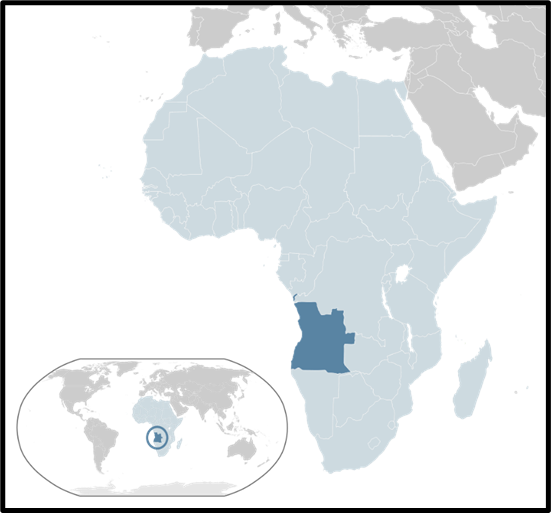
The Context: A Three-Way Tug of War (1975)
In 1975, when the Portuguese finally left, they didn’t hand over a keys to a single successor. Instead, they left a house where three brothers were already at each other’s throats.
To understand the conflict, you must know the actors:
- The MPLA (People’s Movement for the Liberation of Angola): Led by Agostinho Neto. They were Marxist, urban-centered, and tried to rise above tribalism (at least ideologically).
- UNITA (National Union for the Total Independence of Angola): Led by the charismatic but stubborn Jonas Savimbi. Their strength lay in the Ovimbundu tribe of the south.
- The FNLA (National Front for the Liberation of Angola): A weaker group based in the northwest among the Bakongo tribe, supported by Mobutu’s Zaire.
The Internationalization: The Cold War “Puppet Show”
Why did a local struggle turn into a decades-long massacre? Because the world refused to stay out.
- The Marxist Alarm: The USA saw the MPLA’s Marxism as a Soviet “foothold” in Africa. To counter this, Washington poured money and weapons into the FNLA and UNITA.
- The Cuban Intervention: The USSR and Cuba didn’t sit back. Fidel Castro sent thousands of Cuban troops to fight alongside the MPLA.
- The South African Factor: This is the most complex interlinkage. South Africa (then under the Apartheid regime) invaded from the south to support UNITA. Why? Because the MPLA was helping SWAPO, the liberation movement of Namibia (which South Africa was illegally occupying).
Critical Analysis: Angola wasn’t just fighting for its own independence; it was the front line of the struggle for Namibian independence and the global fight against Communism.
The Failed Peace and the “Ego of Savimbi”
By the late 1980s, the Cold War was thawing. In 1991, the Lisbon Peace Accords were signed.
The logic was simple: Cubans leave Angola, South Africans leave Namibia, and Angola holds elections.
- The 1992 Election: The UN monitored it. The MPLA won. International observers called it “free and fair.”
- The Rejection: This is where the tragedy becomes personal. Jonas Savimbi, refusing to accept the role of an “opposition leader,” claimed fraud and restarted the war.
- The Human Toll: In just two years (1992–1994), an average of 1,000 people died every single day. The UN was too small to stop the tide of blood.
The “Blood Diamond” Economy and the End of War
Savimbi didn’t just fight with ideology; he fought with diamonds. By controlling the diamond mines, he financed his private army for another decade.
- The Turning Point (2002): The war only ended when the military solved what politics couldn’t.
- Savimbi was killed in an ambush in February 2002. With the “strongman” gone, UNITA immediately sought peace.
- The Inheritance of Ruin: After 27 years of constant war, the statistics are haunting:
- 1.5 million killed.
- 15 million landmines left in the soil (more mines than people!).
- 4 million displaced (one-third of the population).
- Child Soldiers: Nearly 90,000 children were robbed of their childhood by both sides.
Post-War Recovery: Oil, Wealth, and Inequality
Since 2002, Angola has seen a “miracle” of sorts, but it is a lopsided one.
A. The Economic Irony
Angola is rich. It has oil (65% of which comes from the Cabinda region) and diamonds. But the “Resource Curse” we saw in Nigeria is also present here.
- Corruption: While the nation’s GDP grew, $4 billion in oil money simply “vanished” into the pockets of the elite.
- The Dos Santos Dynasty: President José Eduardo dos Santos ruled from 1979 to 2017. While he brought stability, his family amassed a fortune that stood in stark contrast to the starvation of the masses.
B. The Social Unrest
By 2011-2012, the “peace dividend” had worn thin. The people began to ask: “If the war is over and the oil is flowing, why are we still poor?” This led to violent protests, which the aging Dos Santos met with a heavy hand.
Conclusion: The Lesson of Angola
Angola’s history teaches us that foreign intervention often turns a “fire” into a “conflagration.” When global powers use a local conflict to settle their own scores, the local population pays the price in blood for generations.
Furthermore, Angola proves that the death of a single leader (Savimbi) can sometimes do more for peace than a thousand UN resolutions—a sobering thought on the role of the individual in history.
Comparing the cases we’ve discussed—Ghana’s socialist dreams, Nigeria’s tribal oil wars, Tanzania’s self-reliance, and Angola’s Cold War tragedy—which factor do you believe has been the greatest hurdle to African prosperity: internal tribalism or external interference?