
The Congo/ Zaire
Now, if we move further into the heart of the continent, we encounter the Congo (later Zaire, now the DRC). If Tanzania was a “moral experiment” and Nigeria was a “flawed federation,” the Congo is arguably the most tragic example of “Colonial Irresponsibility.”
When we analyze the Congo, we aren’t just looking at a country; we are looking at a massive, resource-rich territory that was essentially “abandoned” by its colonial masters into a whirlpool of chaos. Let us understand this through the lens of political vacuum and geopolitical greed.
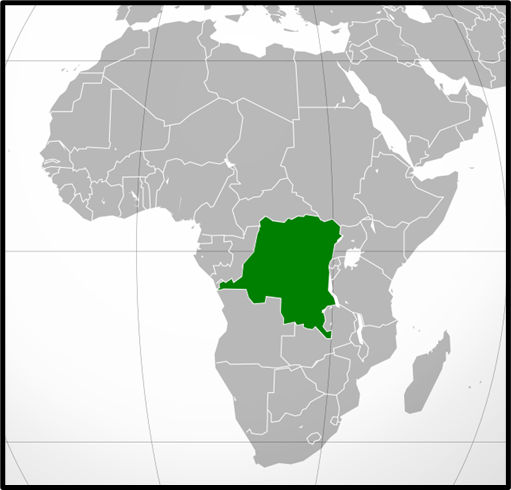
The “Vacuum of 1960”: A Recipe for Disaster
Imagine, a house with 150 rooms, each occupied by a different family, where the landlord suddenly disappears, takes all the keys, and leaves no one in charge. That was the Congo in June 1960.
- Zero Preparation: The Belgians exited so abruptly that there was no “successor class.” There were almost no university graduates, no trained African officers in the army, and political parties had been banned until the very last minute.
- The Fragile Coalition: Power was handed to a mismatched duo: Patrice Lumumba (a charismatic socialist Prime Minister) and Joseph Kasavubu (the President). It was a marriage of convenience that didn’t last a week.
- The Mutiny: Within days, the army revolted. Why? Because the officers were still Belgians. The Congolese soldiers wanted the “fruits of independence”—promotion and dignity—immediately.
The Katanga Secession and the Cold War Trap
The crisis deepened when the wealthiest province, Katanga, declared independence under Moïse Tshombe.
- The Economic Motive: Katanga was the “treasure chest” of the Congo, filled with copper. The Belgian mining company, Union Minière, did not want to lose control to a socialist like Lumumba. They encouraged the secession to keep the minerals in Western hands.
- The UN Dilemma: Lumumba asked the UN for help to crush the rebels. But the UN, led by Dag Hammarskjöld, hesitated to take sides in a civil war.
- The Death of Lumumba: In desperation, Lumumba turned to the USSR. This was his “fatal mistake” in the eyes of the West. In the height of the Cold War, the Americans and Belgians viewed him as a “dangerous communist.” He was arrested, handed over to his enemies, and murdered. It remains one of the darkest stains on 20th-century diplomacy.
The Mobutu Era: The “Kleptocracy” (1965–1997)
Out of the chaos emerged General Joseph Mobutu. He would rule for 32 years, and his reign is a classic study in “Authoritarian Stability.”
- The Cold War Puppet: Because he was anti-communist, the USA and Belgium supported him blindly, despite his brutal tactics.
- Zaire and “Authenticity”: He changed the country’s name to Zaire and his own name to Mobutu Sese Seko. He tried to create a sense of national pride, but it was often a mask for his personal power.
- Economic Ruin: Despite the copper wealth, Mobutu treated the national treasury as his personal bank account. While he built palaces, the infrastructure crumbled. This is what political scientists call a Kleptocracy—government by thieves.
- The Nationality Law (1981): To stay in power, he played the “identity card,” stripping citizenship from migrant workers. This sowed the seeds of ethnic hatred that would explode in the 1990s.
The Kabila Transitions: “The World War of Africa”
By 1997, Mobutu was old, ill, and abandoned by his Western allies. Laurent Kabila, a former Lumumba supporter, marched into the capital and took over, renaming the country the Democratic Republic of the Congo (DRC).
- The Cycle of Disappointment: History often repeats itself as a farce. Kabila proved to be as authoritarian as Mobutu—banning parties and arresting journalists.
- A Continental Conflict: His reign triggered a massive war involving six different countries (including Rwanda, Uganda, Zimbabwe, and Angola). This was not just a civil war; it was a struggle for the Congo’s minerals.
- Joseph Kabila (2001–2019): After Laurent was assassinated by his own bodyguard, his son Joseph took over. He was more “conciliatory” and signed peace deals, but the “Missing Votes” and “Lost Polling Stations” in the 2011 elections showed that democracy remained a distant dream.
Critical Analysis: The Tragedy of “Unfinished Sovereignty”
When we look at the Congo’s timeline, we see a recurring pattern:
- The Resource Curse: Whether it was Belgian copper in 1960 or Rwandan-backed mineral interests in 2012, the Congo’s wealth has been its greatest misfortune. Foreign powers have consistently fueled internal divisions to maintain access to mines.
- Geopolitical Chess: During the Cold War, the Congo was a “pawn.” Post-Cold War, it became a “battlefield” for regional African powers.
- The Institutional Failure: Because the Belgians left no “skeletal structure” of governance, every leader has had to rely on the military and corruption to keep the 150 tribes together.
Conclusion:
The Congo is a reminder that Independence is not just about the withdrawal of a foreign flag; it is about the patient building of institutions. Without education, administrative experience, and economic sovereignty, “freedom” can quickly turn into a long-term hostage situation.
Looking at these three cases—Ghana, Nigeria, and the Congo—we see a spectrum. Ghana had a vision but lacked economic depth; Nigeria had wealth but lacked unity; the Congo had neither.
Between the “Teacher” (Nyerere) and the “Soldier” (Mobutu), who do you think left a more lasting imprint on the African political psyche?