
Socialism and Civil War in Ethiopia
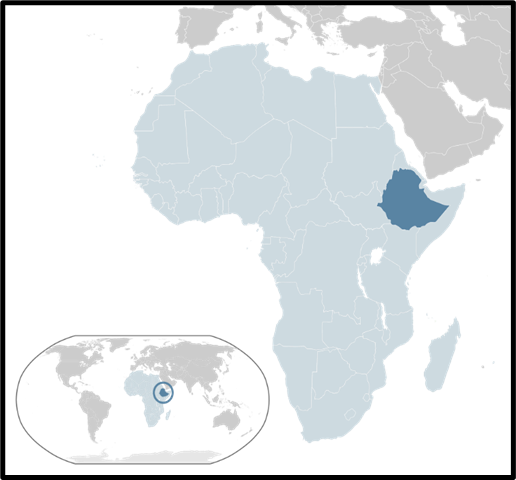
We turn now to a unique corner of the continent: Ethiopia. Unlike almost every other nation we have discussed, Ethiopia was never fully colonized (save for a brief, five-year Italian occupation). However, this “exceptionalism” did not shield it from the same pains of modernization, ethnic tension, and ideological warfare that defined the rest of Africa.
Ethiopia presents us with a study of how an ancient monarchy collapsed into a rigid Marxist state, eventually giving way to an ethnic federation.
Haile Selassie: The Sunset of the Empire (1930–1974)
Haile Selassie, known as the “King of Kings,” was a giant of African history. He stood as a symbol of African independence against Mussolini’s Italy.
- The Eritrean “Success”: In 1952, Selassie successfully lobbied to federate with Eritrea, finally giving Ethiopia a coastline. But, as we see so often, one man’s success is another’s grievance. Eritreans felt annexed, not united, sparking a 30-year war for independence.
- The Failure to Evolve: Selassie was “wily” in diplomacy but stagnant at home. By the 1970s, he was an 80-year-old emperor ruling a country plagued by feudal land systems and horrific famines. The youth and the military saw a leader who was more interested in international prestige than the hunger of his own people.
The Derg and Mengistu: Red Terror (1974–1991)
In 1974, the “Derg” (the Committee) overthrew the Emperor. What followed was a radical shift from an ancient monarchy to a Marxist-Leninist military junta led by Major Mengistu Haile Mariam.
- Stalinism in Africa: Mengistu attempted a total transformation. He nationalized land and industry. Just as we saw with Stalin in the USSR, his forced “collectivization” of farms was a disaster.
- The Famine of 1984: This led to one of the most famous humanitarian crises in history. While Mengistu spent millions on military parades to celebrate the revolution, his people were starving. Only international aid (the famous “Live Aid” era) prevented a total demographic collapse.
- The Soviet Withdrawal: Mengistu stayed in power because of Soviet weapons. When the Cold War ended and the USSR stopped sending guns, his regime withered. In 1991, as rebels closed in, he fled to Zimbabwe.
Meles Zenawi: The Architect of Ethnic Federalism
The EPRDF, led by Meles Zenawi, took over a shattered nation. Zenawi’s approach was a fascinating political experiment:
- The Right to Leave: To solve the “Eritrean problem,” Zenawi allowed Eritrea to legally secede in 1993. This made Ethiopia landlocked once again but ended one of Africa’s longest wars (though a fresh border war would erupt in 1998).
- Ethnic Federalism: Zenawi reorganized Ethiopia into states based on ethnicity. He argued this gave tribes “ownership” of their regions, but critics argued it only deepened ethnic divisions.
- The “Developmental State”: Zenawi was a brilliant but authoritarian intellectual. Under his rule, the economy grew by leaps and bounds (6.5%–10% annually). He crushed corruption but also crushed dissent, as seen in the 2005 election crackdowns.
The Somali Entanglement and the New Guard
In his later years, Zenawi became a key ally of the USA in the “War on Terror.”
- The Somalia Intervention (2006): Fearing the rise of Islamist groups next door, Ethiopia invaded Somalia. While they achieved quick military victories, they found—as many nations do—that “occupying” Somalia is much harder than “invading” it. The Islamists (Al-Shabaab) simply waited for them to leave and then surged back.
- The 2012 Vacuum: Zenawi’s death at 57 left a massive hole. He had ruled with “prestige and charisma,” and his successor, Hailemariam Desalegn, inherited a system built for a strongman, but without the strongman to run it.
Critical Analysis: The Ethiopian Paradox
When we look at Ethiopia’s path, we see two conflicting realities:
- Economic Success vs. Political Freedom: Ethiopia proved that a state could achieve “Asian-style” growth in Africa through heavy government planning. However, this came at the cost of press freedom and opposition rights.
- The Sovereignty Trap: Ethiopia escaped European colonization only to experience a “home-grown” colonization under the Derg’s Marxism. It reminds us that tyranny does not always wear a foreign face.
- The Landlocked Challenge: The loss of Eritrea remains Ethiopia’s greatest strategic headache, forcing it to rely on the port of Djibouti and shaping its entire foreign policy.
Conclusion:
Ethiopia’s history is a pendulum swinging between the Imperial past and a Socialist future, finally settling on a complex Ethnic Present. It is a country that has survived some of the worst famines and wars of the century, yet remains the “diplomatic capital” of Africa.
Having looked at Ethiopia’s “Ethnic Federalism”—giving different tribes their own states—do you think this is a clever way to manage diversity, or is it a recipe for a future civil war, like we saw in Yugoslavia?
One Comment