
Apartheid and Black Majority Rule in South Africa
If the other African nations we studied were struggling with the “vacuum” left by Europeans, South Africa was the opposite. Here, a well-organized white minority decided to dig in their heels and create a legal fortress of racial segregation. Let us understand this.
The Historical Roots: A Mixed and Troubled Soul
To understand South Africa, you must look at its map and its history of double colonization.
- The Dutch (Afrikaners/Boers): They arrived in 1652. They were farmers who developed a deep, religious conviction that they were a “chosen people” and that the land was theirs.
- The British Intervention: Britain captured the Cape in 1795. When the British abolished slavery in 1838, the Boers were outraged. They began the “Great Trek”—moving inland to escape British law and setting up their own republics (Transvaal and Orange Free State).
- The Union of 1910: After the bloody Boer War, the British and the Boers finally united to form the Union of South Africa.
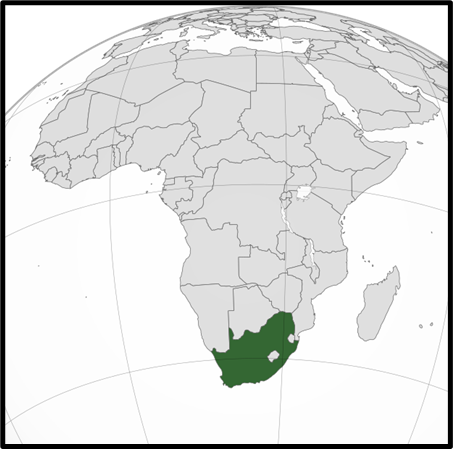
The Population Pyramid (1910)
The tragedy of South Africa lies in these numbers:
- 70% Black Africans (Bantus): The heartbeat of the land, yet marginalized.
- 18% Whites: Held 100% of the political and economic power.
- 9% Coloureds (Mixed race) & 3% Asians.
Even before the official “Apartheid,” life for blacks was a nightmare of Pass Laws (restricting movement) and Reserves (limiting them to just 7% of the land).
Dr. Malan and the Birth of Apartheid (1948)
Why did things get worse after World War II? While the rest of the world was moving toward human rights, South Africa moved backward.
- The Fear of Equality: After India became independent in 1947, the white Nationalists, led by Dr. Malan, panicked. They feared that “racial equality” would end their supremacy.
- The Ideology: They introduced Apartheid (meaning “separateness”). It wasn’t just a policy; it was a pseudo-religious doctrine. The Dutch Reformed Church even used the Bible to claim that whites were a “master race.”
- The Broederbond: A secret society that ensured every lever of power—police, courts, schools—was in Afrikaner hands.
The Pillars of Apartheid: A Fortress of Segregation
Under leaders like Verwoerd (the “Architect of Apartheid”), the system became total.
- Total Separation: Separate buses, toilets, hospitals, and even park benches. If a black community was too close to a white one, it was bulldozed (like Sophiatown).
- Racial Classification: Everyone carried an ID card based on race. Your card determined where you could live, work, and die.
- The Bantustan Myth: The government set up “homelands” (Bantustans). They claimed these were “independent,” but they were actually overcrowded rural slums—dumping grounds for blacks the white economy didn’t need at that moment.
- The Economic Flaw: Here is the irony: the whites wanted to be “separate,” but their luxury depended entirely on black labor in the mines and kitchens. The economy was a “integrated” reality built on a “segregated” law.
The Fire Within: Internal Resistance
The struggle was long and shifted from “appeals” to “armed struggle.”
- The ANC and the Freedom Charter (1955): The African National Congress declared that “South Africa belongs to all who live in it, black and white.” They demanded the simple right to vote and equal pay.
- The Sharpeville Massacre (1960): This was the Turning Point. Police killed 67 peaceful protesters. It convinced leaders like Nelson Mandela that non-violence had reached its limit.
- MK (Spear of the Nation): The ANC launched a sabotage wing. Mandela was soon arrested and sentenced to life on Robben Island.
- The Soweto Uprising (1976): When the government tried to force black students to learn in Afrikaans (the language of the oppressor), the children revolted. Police killed 200. This sparked a flame that never went out. Among the martyrs was Steve Biko, the voice of Black Consciousness, beaten to death in custody.
The World’s Response: A Tardy Conscience
Outside South Africa, the response was a mix of “words” and “inaction.”
- The Commonwealth: South Africa was forced out in 1961 after Britain’s Harold Macmillan warned of the “Wind of Change.”
- The UN’s Failure: The UN called for boycotts, but the “Big Powers” (USA, UK, France) kept trading. Why? Because during the Cold War, they saw the Apartheid regime as a “bastion against Communism.” They valued their gold and mineral trade more than the lives of the majority.
Critical Analysis: The “Logic” of the Oppressor
If you analyze this multidimensionally, Apartheid was a desperate attempt to stop time. The Afrikaners were trying to build a 17th-century racial hierarchy in a 20th-century industrial world.
Interlinkage: Notice how the Sharpeville Massacre in 1960 happened exactly when most of Africa (like Nigeria and the Congo) was getting independence. The contrast was stark: while the rest of the continent was opening its doors, South Africa was locking its gates.
Now, consider this: Was Apartheid a product of “hate,” or was it a product of “fear”? And can a government ever truly survive if it is at war with 70% of its own people?
P. W. Botha: “Adapt or Perish” (1979–1989)
By 1979, the white government realized their fortress was under siege. P. W. Botha was no liberal, but he was a realist. He saw three major cracks in the wall:
- The Geopolitical Shift: By 1980, South Africa was surrounded. The collapse of the Portuguese Empire (Angola/Mozambique) and the fall of white-ruled Rhodesia (now Zimbabwe) meant there were no more “buffer states.” Hostile black-ruled nations were now on their doorstep.
- The Economic Squeeze: International sanctions were finally biting. The USA and the Commonwealth (minus a hesitant Margaret Thatcher) cut off loans and oil.
- The Demographic Reality: The white population was shrinking as a percentage, while the black population was growing, better educated, and more urbanized.
Botha’s Strategy: He tried “Apartheid Lite.” He allowed black trade unions and abolished the marriage ban, but he refused to give blacks the vote. This backfired. See, reforming an authoritarian regime is like opening a dam—once you let a little water out, the whole structure eventually collapses.
De Klerk and the Great Leap (1989–1994)
F. W. de Klerk inherited a country on the verge of civil war. He made a historic gamble: he decided to stop fighting the inevitable and instead negotiate the terms of surrender.
- The Release (1990): After 27 years, Nelson Mandela walked free. The ANC was legalized.
- The Negotiation: It wasn’t easy. De Klerk faced “white-right” extremists who felt betrayed, while Mandela had to navigate a bloody power struggle with the Zulu Inkatha Freedom Party.
- The 1994 Miracle: The first multi-racial election was held. The world held its breath, expecting a bloodbath. Instead, they saw long lines of people of all races waiting to vote. Mandela became President, with his former jailer’s party (De Klerk) as his Vice President.
The Mandela Presidency: Reconciliation over Revenge
Mandela’s greatest contribution was not policy, but psychology. He knew that if the blacks sought revenge, the country would burn.
- The Truth and Reconciliation Commission (TRC): Led by Archbishop Desmond Tutu, this was a stroke of genius. It offered amnesty in exchange for truth. It allowed the nation to “vomit out” the secrets of the past so they could begin to heal.
- The Statesman: Mandela stepped down after one term—a rarity in Africa—setting a precedent for democratic transition.
The Mbeki and Zuma Eras: The Challenges of Freedom
The “honeymoon” ended as the ANC had to move from being a liberation movement to a governing party.
| Feature | The Progress | The Crisis |
| Social | 70% of households got electricity; 9 million more got clean water. | The AIDS Epidemic: Mbeki’s denialism led to millions of preventable deaths. |
| Economic | Diversified exports (not just gold); growing tourism. | Unemployment: Reached a staggering 25% by 2009. |
| Political | Peaceful transitions of power. | Corruption: The “Zuma Era” was marked by scandals and the “Marikana Massacre,” where police killed striking miners. |
Critical Analysis: The Unfinished Revolution
As we conclude our study of South Africa, we must look at the “Achilles’ Heel” of the new democracy:
- The Poverty Gap: South Africa remains one of the most unequal societies on Earth. While the laws of Apartheid are gone, the “Economic Apartheid” remains—where the wealth is still largely concentrated in few hands.
- Institutional Fatigue: The ANC, once the hero of the struggle, has struggled with internal feuds (like the Mbeki-Zuma rivalry) and accusations of becoming the “new elite.”
- The Ghost of the Past: Events like the Marikana Massacre (2012) show that the state’s relationship with the working poor is still fraught with tension and violence.
Final Review: The African Spectrum
So, we have traveled from the hopeful pan-Africanism of Nkrumah’s Ghana, through the tribal complexities of Nigeria, the socialist experiments of Nyerere’s Tanzania, the tragedies of the Congo and Angola, the horrors of Rwanda, and finally to the fragile hope of South Africa.
The central question of African History in the 20th century remains:
Was the “failure” of many African states due to the inherent flaws of the leaders, or was the colonial “inheritance”—the borders, the debt, and the racial divisions—simply too heavy a burden for any leader to carry?
Which of these leaders do you believe provides the best “blueprint” for Africa’s future: the visionary (Nkrumah), the moralist (Nyerere), or the reconciler (Mandela)?