
Democracy, Dictatorship and Military Government in Ghana
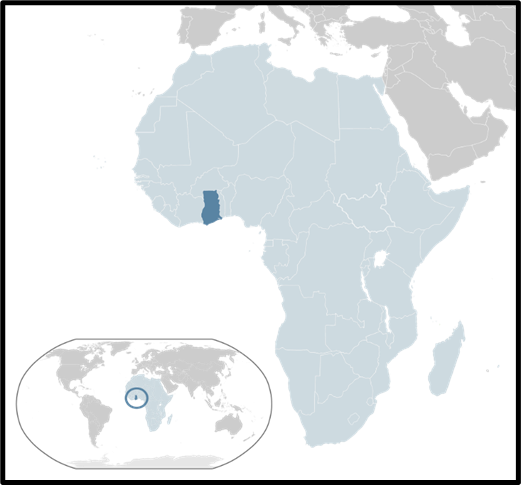
Let us next focus our attention on a specific and fascinating case study: Ghana. If Africa was the laboratory of post-colonial experiments, Ghana was the first and most significant test tube.
In 1957, Ghana became the first sub-Saharan nation to break the chains of colonialism. It was the “Black Star” of Africa. But as we shall see, the journey from the euphoria of independence to the stability of the 21st century was a rollercoaster of visionary dreams, military boots, and economic heartbreaks.
The Era of Kwame Nkrumah: The Visionary’s Trap (1957–1966)
Kwame Nkrumah was not just a leader; he was a phenomenon. To understand him, you must understand two dimensions of his personality: the Socialist Architect and the Pan-African Prophet.
A. The Achievements: Building a Modern State
Nkrumah believed that political independence was meaningless without economic independence.
- Industrialization: He doubled cocoa production and pushed for cattle-breeding and forestry.
- The Volta River Project: This was his “temple of modern Ghana.” By building a massive dam, he provided hydro-electric power for the nation and a bauxite-smelting plant.
- Pan-Africanism: Nkrumah looked beyond Ghana’s borders. He dreamt of a “United States of Africa,” forming unions with Guinea and Mali. He was a global statesman, rubbing shoulders with the Commonwealth and Eastern Bloc alike.
B. The Seeds of Downfall: Why did the “Messiah” fall?
Historians often debate: was Nkrumah a victim of circumstances or his own ego?
- Economic Overreach: He borrowed too much, too fast. When the global price of cocoa (Ghana’s lifeblood) crashed, the debt became a noose.
- The Bauxite Paradox: In a classic case of neo-colonialism, the American corporation that ran the smelting plant imported bauxite from abroad rather than using Ghanaian bauxite. This drained foreign exchange instead of saving it.
- The Authoritarian Turn: This is the “Political Dimension.” Nkrumah replaced the parliamentary system with a one-party state. He arrested rivals like J.B. Danqua and promoted a cult of personality—calling himself the “Messiah.”
- External Factors: The CIA, wary of his ties to the USSR and China, supported the 1966 military coup that ousted him while he was away in China.
The Fragility of Democracy: The Kofi Busia Experiment (1969–1972)
After a brief military rule, Dr. Kofi Busia—an Oxford-educated academic—took charge. His story is a lesson in the “Economic Trap of Democracy.”
- The Debt Burden: Busia inherited a mountain of debt. He spent 40% of export profits just paying back interest.
- The Bitter Pill: To fix the economy, he devalued the currency and restricted imports. This made him unpopular.
- The Lesson: In a young democracy, if the stomach is empty, the ballot paper loses its value. Tribal squabbles re-emerged, and the army used the economic chaos as an excuse to seize power again under Colonel Acheampong.
The Rawlings Revolution: From “House-Cleaning” to Reform
The most pivotal figure in modern Ghana is Jerry J. Rawlings. He represents a unique transition from a military “strongman” to a democratic “statesman.”
A. The “House-Cleaning” (1979)
At just 32, this charismatic air-force officer seized power. He didn’t just want to rule; he wanted to “purge” corruption. He executed former leaders (Acheampong and Akuffo) in a controversial “house-cleaning” exercise before briefly handing power back to a civilian, Dr. Limann.
B. The Return and the PNDC (1981–1992)
When Limann failed to stop the 125% inflation, Rawlings returned. But this time, he was different.
- Realpolitik over Ideology: Though initially left-leaning, he pragmatically turned to the IMF for help.
- The Recovery: By following austerity measures, Ghana saw 7% growth and a massive drop in inflation.
- Evolution: In 1992, Rawlings did something rare: he shed his uniform, formed a political party (the NDC), and won a democratic election. He served two terms and, most importantly, stepped down voluntarily in 2000.
The Maturity of the State: Kufuor and Beyond (2001–2008)
The election of John Kufuor in 2001 marked Ghana’s “Democratic Consolidation.” It was a peaceful transfer of power from an incumbent party to the opposition—a rarity in Africa at the time.
- Diversification: Kufuor moved away from just cocoa and gold, modernizing infrastructure and the private sector.
- Social Welfare: He introduced the National Health System and the School Feeding Programme, providing hot meals to the poorest children.
- International Prestige: Because of its stability, Ghana became a “darling” of the West, receiving record development grants ($500 million) from the US.
Critical Analysis: The “Ghanaian Model”
If you are writing an answer on this, you must highlight these interlinkages:
- Economic Structuralism: Ghana’s history shows that political stability is directly tied to the global commodity market (Cocoa and Gold). When prices fall, governments fall.
- The Military-Civilian Nexus: Rawlings proved that the military can be a “stabilizing force” only if it eventually subjects itself to the democratic will.
- Governance vs. Democracy: Nkrumah gave Ghana vision, but Kufuor gave Ghana institutions. For a nation to survive, it needs both.
Today, Ghana stands as a beacon of hope—a country that moved from “The Messiah’s Dictatorship” to a “Resilient Democracy.”
Look at the trajectory, students: from the 125% inflation of the 80s to being one of the fastest-growing economies in the 90s. This is the power of political will combined with institutional discipline.
Now, let me ask you: Do you think Nkrumah’s “totalitarian measures” were a necessary evil for a new nation, or were they the very thing that doomed his vision?