
Civil Wars and Corruption in Nigeria
Now, if Ghana was the first laboratory of African independence, Nigeria is undoubtedly its most complex and high-stakes experiment. Today, we shall analyze the “Giant of Africa”—a nation blessed with immense oil wealth but cursed by the deep-seated frictions of its own diversity.
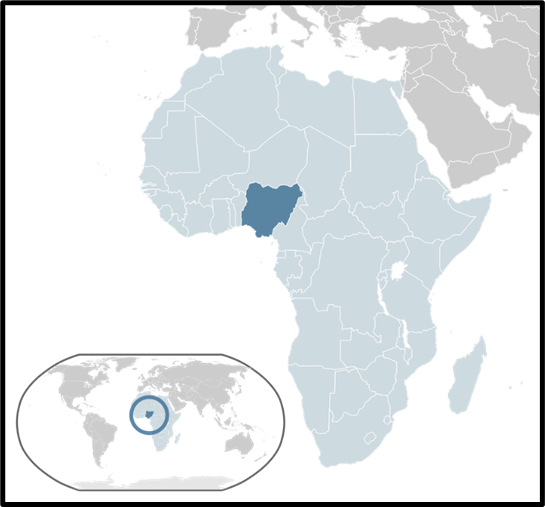
To understand Nigeria, you must look beyond the map. You must look at the “soul” of the nation, which is divided into three distinct psychological and geographic zones.
The Genesis of Conflict: A Flawed Federalism (1960–1966)
When Nigeria gained independence in 1960, the world was optimistic. It had oil, a moderate Prime Minister (Sir Abubakar Tafawa Balewa), and a veteran President (Nnamdi Azikiwe). But beneath this calm surface, a “tribal volcano” was simmering.
- The Tribal Triangle: The British left behind a federal structure divided into three regions.
- The North: Dominant Hausa and Fulani tribes (mostly Muslim).
- The West: The Yoruba tribe.
- The East: The Ibo tribe (mostly Christian and academically driven).
- The Logic of Fear: The West and East feared the North’s population-based political dominance. Meanwhile, the North feared the economic and educational advancement of the Ibos. This was not just a political struggle; it was an existential anxiety.
- The Economic Trigger: By 1964, the “dream of independence” met the “reality of hunger.” Inflation rose, unemployment soared, and corruption became the standard operating procedure. When the government tried to “fix” the 1964 elections, the democratic fabric tore apart.
The Biafran War: The Tragedy of Secession (1967–1970)
In 1966, a series of bloody events changed Nigeria forever.
- The Coups: Ibo officers killed Balewa in a coup. Months later, Northern soldiers retaliated by killing the Ibo leader, General Ironsi.
- The Pogroms: Massacres of Ibos in the North forced a mass exodus back to the East.
- The Birth of Biafra: Colonel Ojukwu, representing the Ibos, declared the East as the independent “Republic of Biafra” in 1967.
The Conflict and its Dimensions
The central leader, Colonel Yakubu Gowon, promised a “short surgical action” to bring the East back. It turned into a three-year nightmare.
- International Dimension: This was a Cold War anomaly. Both Britain and the USSR supported the central government, while France supported Biafra.
- The Human Cost: This wasn’t just a war of bullets; it was a war of starvation. Images of malnourished Biafran children shocked the world, creating the first modern global humanitarian outcry.
- The Outcome: Biafra surrendered in 1970. Nigeria remained one, but the psychological scars were permanent.
The Oil Curse: Wealth Without Development
Following the war, Nigeria saw a “miraculous” recovery thanks to the 1970s oil boom. But, here lies a profound lesson in economics: Wealth does not equal Progress.
- Mono-Economy Trap: Nigeria became dangerously dependent on oil. When world oil prices crashed in the 1980s, the Nigerian economy went into a tailspin.
- The Cycle of Coups: From 1975 to 1999, Nigeria became a “musical chair” of military dictators (Bukhari, Babangida, Abacha). Each general claimed to be “cleaning the house,” only to build a bigger mansion for himself.
- The Darkest Hour (Abacha Era): Under General Sani Abacha (1993-1998), Nigeria became a pariah state. Corruption was systemic—$12 billion in oil revenue simply “disappeared.” Opposition was silenced through execution, leading to Nigeria’s suspension from the Commonwealth.
The Return to Democracy and the “Sharia” Challenge
In 1999, the military finally retreated to the barracks, and Olusegun Obasanjo took over as a civilian President. But a new monster emerged: Religious Polarization.
- The Sharia Conflict: Between 2000 and 2002, 12 northern states adopted Sharia Law. This introduced medieval punishments like stoning and amputation.
- The Clash of Civilizations: To Christians in the South, this was a violation of human rights; to Muslims in the North, it was an expression of identity. The Miss World Riot (2002) is a perfect example of how a simple newspaper article could lead to 200 deaths, showing how brittle the social peace had become.
- The Rise of Boko Haram: By 2011, the frustration of the North evolved into a radical insurgency. Boko Haram (meaning “Western education is a sin”) began a campaign of terror that threatened to lose the government control of the North entirely.
Critical Analysis: Why did the “Giant” Flounder?
If we analyze Nigeria from a multidimensional perspective, we see three core failures:
- The Resource Curse (Paradox of Plenty): Instead of using oil to build factories and schools, the elite used it as a “private ATM.” This led to a 70% poverty rate despite $250 billion in earnings.
- Crisis of Leadership: Unlike Jerry Rawlings in Ghana, who eventually built institutions, Nigerian leaders (with some exceptions like Yar’Adua) often focused on “Prebendalism”—using state offices to benefit their own tribe or religion.
- The “Artificial State” Problem: Nigeria remains a “collection of nations” rather than a “single nation.” The struggle between the Muslim North and the Christian South remains the primary fault line of the state.
Conclusion:
Nigeria’s history is a sobering reminder that stability requires more than just wealth; it requires justice. Without equitable distribution of resources and a secular respect for diversity, even the wealthiest nation can become a “hollow giant.”
Looking at the history of Ghana and Nigeria together, do you think the “Military Coup” was a disease that killed African democracy, or was it a “symptom” of an already dying economic system?