
UPSC CURRENT AFFAIRS — 16 NOVEMBER 2026
1. Splitting the Supreme Court: The Two-Tier Debate
(POLITY AND GOVERNANCE) (TH) A record backlog of 92,318 pending cases at the end of 2025 has revived a long-standing proposal: divide the Supreme Court into a lean Constitutional Court and four or five regional Courts of Appeal.
Why the Court Is Overloaded
The apex court was designed as the guardian of the Constitution, not as a routine court of appeal. Yet most of its time now goes into deciding ordinary disputes that have already passed through two or three courts below.
- Record pendency: the Court closed 2025 with 92,318 pending cases — nearly 10,000 more than a year earlier — after about 75,410 filings and 65,615 disposals.
- More judges, same queue: sanctioned strength was raised from 31 to 34 in 2019 (and reportedly to 38 in 2026), but pendency kept rising.
- Shrinking constitutional work: Constitution Bench judgments have fallen from well over a hundred a year in the early 1960s to a handful a year since 2010.
- SLP flood: the Special Leave Petition under Article 136, meant as an extraordinary, discretionary remedy, now works as a near-routine fourth appeal in civil, criminal, tax and service matters.
The Proposed Design
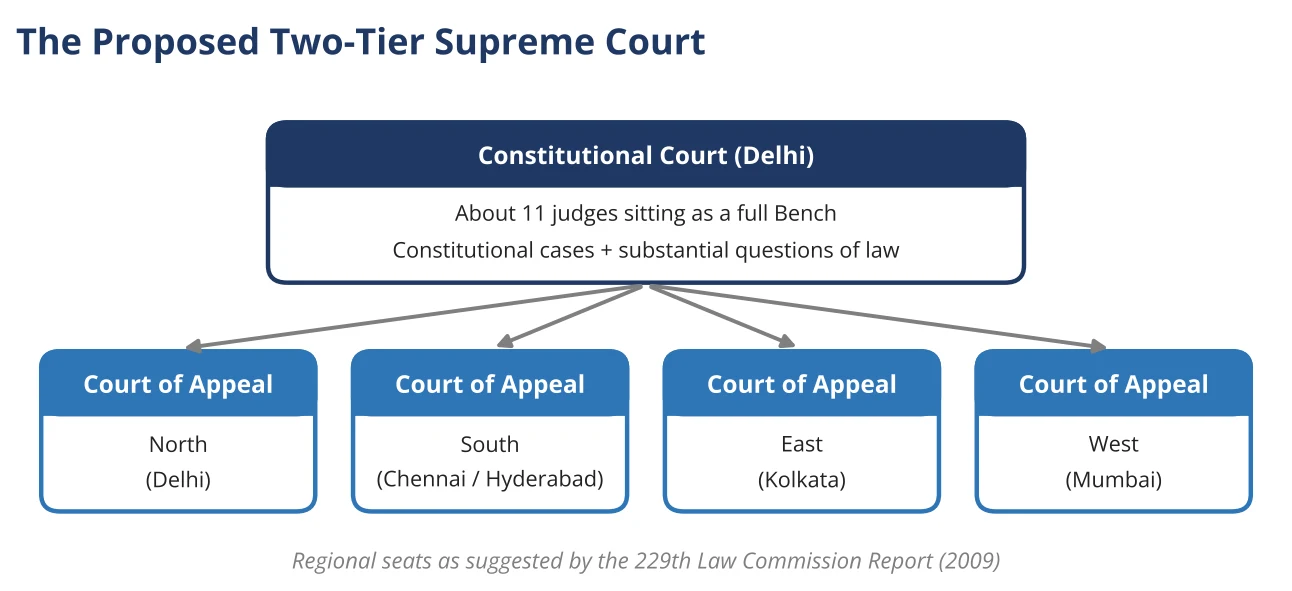
- Constitutional Court: about 11 judges in Delhi, always sitting together, hearing only constitutional cases and substantial questions of law.
- Courts of Appeal: four or five regional courts to decide the civil, criminal, tax and service appeals that now reach Delhi through SLPs.
- Guiding idea: sort the docket rather than merely speed it up — questions that shape the Republic should not wait in the same queue as individual disputes.
Constitutional and Institutional Footing
| Source | What It Says |
|---|---|
| Article 130 | The Supreme Court sits in Delhi or at such other places as the Chief Justice of India may appoint, with the President’s approval. |
| Bihar Legal Support Society v. CJI (1986) | A Constitution Bench observed that the Supreme Court was not meant to be a regular court of appeal. |
| 95th Law Commission Report (1984) | Split the Court into a Constitutional Division and a Legal Division. |
| 229th Law Commission Report (2009) | A Constitution Bench in Delhi plus four Cassation Benches — Delhi, Chennai/Hyderabad, Kolkata and Mumbai. |
| Parliamentary Standing Committee (2023) | Regional Benches under Article 130 to improve access to justice. |
| 2016 reference | A three-judge Bench framed questions on a national appellate court and referred them to a larger Bench; the reference remains unheard. |
Recommendations of the Law Commission are advisory; see also Law Commission of India and the Court’s jurisdiction and powers.
Gains and Risks
| Why Divide | What Could Go Wrong |
|---|---|
| Constitutional primacy: a dedicated Bench can settle structural questions without being swamped by routine appeals. | Amendment needed: Courts of Appeal outside the Supreme Court would require a constitutional amendment, inviting a basic structure challenge. |
| Access: regional benches cut the cost of litigating in Delhi for southern, eastern and north-eastern States. | Litigation surge: without a tighter Article 136 filter, cheaper regional appeals may simply recreate backlogs. |
| Consistency: full-Bench rulings would replace conflicting small-Bench views with one precedent binding under Article 141. | Divergent rulings: regional courts could read the same Central law differently. |
| Scalable capacity: appellate strength can grow with filings while the constitutional Bench stays small. | Forum fights and stature: disputes over which court has jurisdiction; past CJIs and the 2010 Full Court opposed Benches outside Delhi. |
📖 Read More: Supreme Court • Jurisdiction and Powers of the Supreme Court • Articles Related to Supreme Court • Law Commission of India
2. Holding the Quad Together Amid Strategic Drift
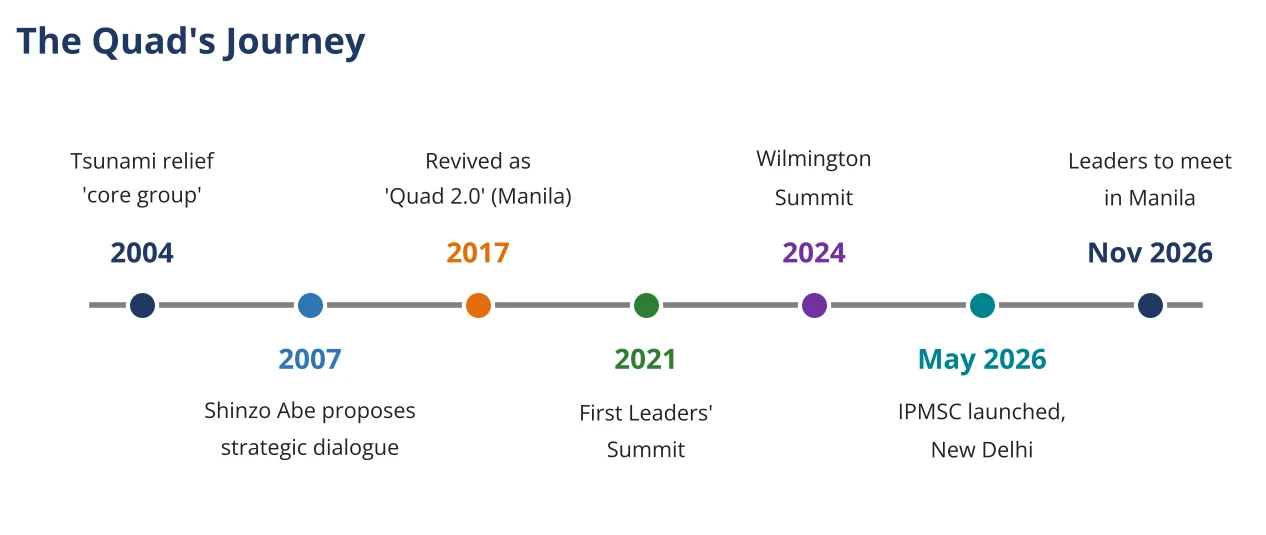
(INTERNATIONAL RELATIONS) (TH) Leaders of the Quad — India, the US, Japan and Australia — are expected to meet in Manila in November 2026 on the sidelines of the ASEAN Summit. It would be the first leaders’ meeting since the 2024 Wilmington Summit and since Donald Trump’s second term began.
What the Quad Is
The Quadrilateral Security Dialogue is an informal, issue-based partnership for a free, open, inclusive and prosperous Indo-Pacific. Unlike NATO, it has no treaty, secretariat or founding charter.
- Maritime security: maritime domain awareness to track illegal fishing and ‘dark ships’, and the Malabar naval exercise.
- Technology and supply chains: critical minerals, trusted telecom (Open RAN), undersea cables for Pacific islands, and emerging technologies.
- Public goods: disaster relief, health security and climate action across the region.
Resilience Despite Turbulence
2025 was a rough year: no leaders’ summit was held and trade frictions strained US ties with partners, especially India. Yet working-level cooperation continued — the maritime domain awareness initiative was upgraded to the Indo-Pacific Maritime Surveillance Collaboration (IPMSC), launched in New Delhi in May 2026 after the Quad Foreign Ministers’ Meeting.
Fault Lines
| Challenge | Why It Matters |
|---|---|
| Thin institutions | Momentum depends on the political will of four governments and their electoral cycles. |
| No economic pillar | No Quad trade deal; the US and India are outside CPTPP and RCEP, so there is little answer to China’s Belt and Road Initiative. |
| US bandwidth | Ukraine, West Asia and burden-sharing demands raise doubts about Washington’s staying power in Asia. |
| Hedging | Partners are building side arrangements — Japan’s OCEAN framework, a Japan–Australia–India defence trilateral, and growing French engagement. |
| India’s continental gap | The Quad is maritime; India’s sharpest threats lie on land along the LAC and the western border. |
| Russia factor | India’s defence and energy ties with Moscow sit uneasily with the sanctions approach of the other three. |
| Differing visions | US FOIP versus India’s inclusive MAHASAGAR outlook; also data free flow versus India’s data localisation stance. |
Why India Stays Invested
- Strategic autonomy: balances China without a formal military alliance.
- Net security provider: better maritime awareness strengthens India’s role in the Indian Ocean (see maritime strategy).
- China+1: supply-chain diversification opens room for Indian manufacturing.
Way Forward
- Create small working-level secretariats for specific domains such as critical minerals and cyber security.
- Deliver visible public goods — infrastructure, Open RAN, climate finance — rather than statements.
- Anchor projects in the ASEAN Outlook on the Indo-Pacific to keep ASEAN centrality intact.
- Keep AUKUS and the Quad complementary, and give more attention to the Indian Ocean.
📖 Read More: India–US Relations • India–Japan Relations • India and Australia Relations • Maritime Foreign Policy Strategy • ASEAN
3. Retail Inflation Breaches RBI’s 6% Upper Limit
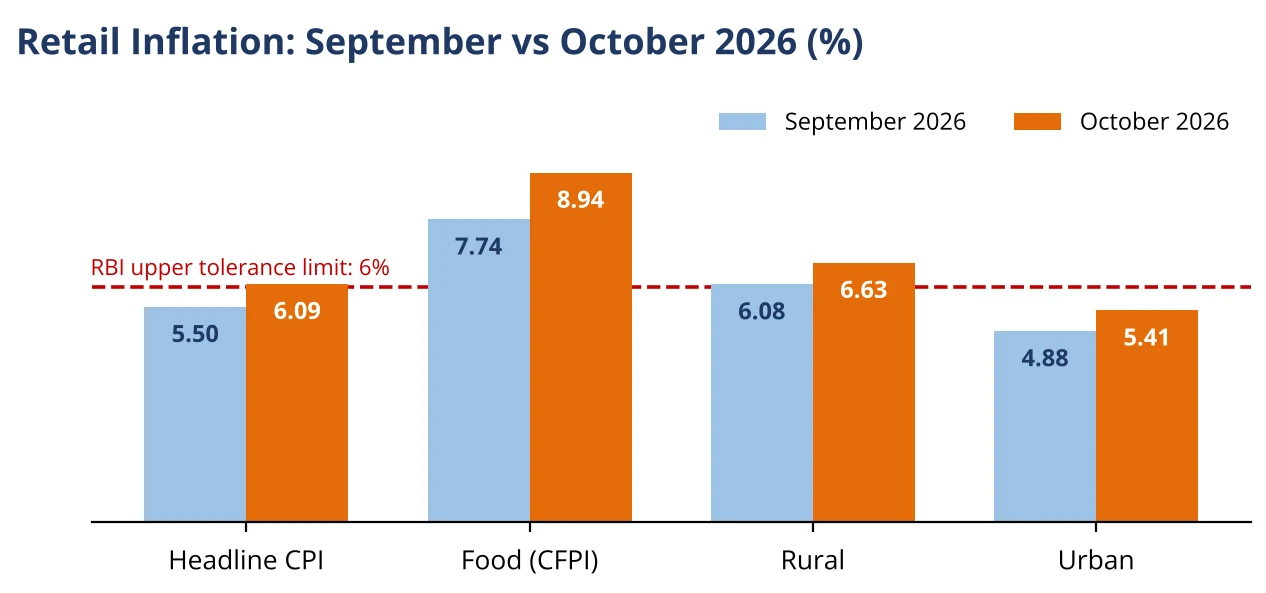
(ECONOMICS) (TH) (DTE) Retail inflation rose to a two-year high of 6.09% in October 2026, crossing the RBI’s upper tolerance limit of 6% for the first time in two years, as per data released by MoSPI on 12 November 2026.
Key Numbers
- Headline CPI: up from 5.5% in September to 6.09%.
- Food inflation (CFPI): 7.74% → 8.94%; onions, garlic, ginger and lemons were among the five fastest-rising items, alongside silver — the only non-food item.
- Rural vs urban: rural 6.08% → 6.63%; urban 4.88% → 5.41% — a heavier cost-of-living burden in villages.
- Falling prices: potatoes, cauliflower and coconuts recorded negative inflation.
What Drove It
- Supply shocks: erratic weather, El Niño-linked rainfall deficits and crop diseases.
- Imported costs: the West Asia conflict raised crude oil and fertiliser prices; a weaker rupee made imports dearer.
The New CPI Basket
The data use the revised CPI series with base year 2024 = 100. Weights come from the Household Consumption Expenditure Survey 2023-24, which cut the share of food and beverages from 45.86% to 36.75% — still the largest group, so the index remains sensitive to farm shocks. See measurement of inflation.
Flexible Inflation Targeting (FIT)
| Element | Details |
|---|---|
| Legal basis | Section 45ZA, RBI Act, 1934; FIT adopted in 2016 after the Urjit Patel Committee |
| Target | 4% CPI (Combined) with a band of 2–6%; retained for 1 April 2026 – 31 March 2031 |
| Who sets the rate | Six-member Monetary Policy Committee |
| Failure | Average inflation outside the band for three consecutive quarters |
| Accountability | Section 45ZN: RBI reports to the Centre on reasons, remedial action and timeline |
Inflation > 6% for 3 quarters → Target failure → RBI report to Centre (Sec 45ZN) → Reasons + remedies + time frame
The MPC had already raised the repo rate by 25 basis points to 5.50% in October 2026, signalling ‘calibrated tightening’. Since today’s spike is largely supply-driven, rate hikes alone may have limited effect; supply-side steps (stock releases, import duty tweaks) matter too. See instruments of monetary policy.
📖 Read More: Inflation • Measurement of Inflation • Foundation of Monetary Policy • Instruments of Monetary Policy
4. Rice Exports and the Hidden Cost of Water
India’s Rice Economy at a Glance
| Indicator | Status |
|---|---|
| Production (2025-26) | About 154.02 million tonnes |
| Global position | Largest exporter since 2012; about 30–35% of world rice exports |
| Exports | 17.73 Mt (2020-21) → 21.57 Mt (2025-26); value $8.82 bn → $11.54 bn |
| Leading States | Uttar Pradesh, Telangana, West Bengal, Punjab, Chhattisgarh, Odisha, Madhya Pradesh, Bihar, Andhra Pradesh, Tamil Nadu |
Environmental Costs
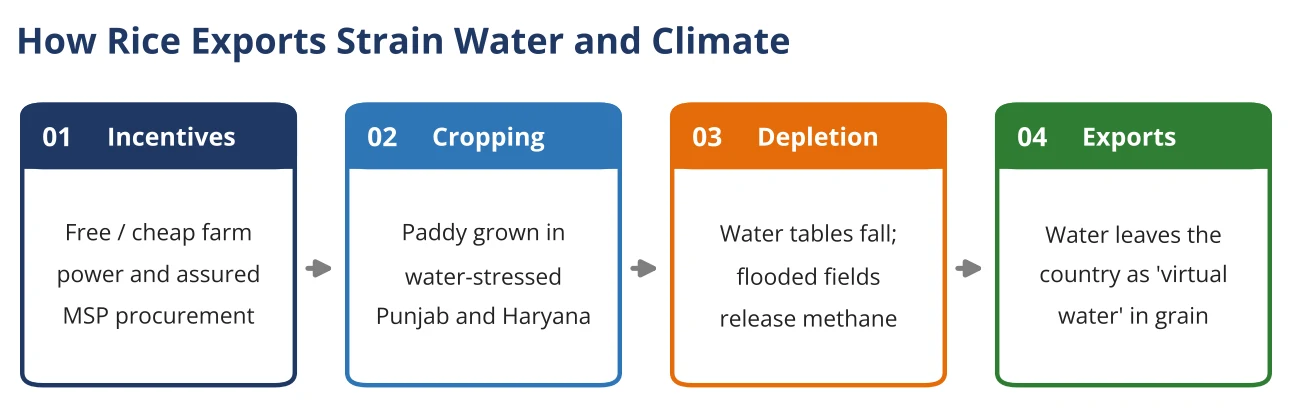
- Groundwater depletion: continuous flooding makes paddy very water-intensive; Punjab and Haryana draw down aquifers fastest.
- Virtual water: every tonne exported carries the water used to grow it — a hidden export of a scarce resource (virtual water).
- Methane: flooded fields create oxygen-free conditions in which microbes release methane; excess nitrogen fertiliser adds nitrous oxide (see greenhouse gases).
- Stubble burning and soils: residue burning pollutes air; monocropping and fertiliser overuse degrade soil health.
Smarter Ways to Grow Rice
| Technique | How It Helps |
|---|---|
| Alternate Wetting and Drying (AWD) | Fields are allowed to dry before re-flooding — less water and less methane |
| Direct Seeded Rice (DSR) | Seeds sown directly, skipping nursery and transplanting — saves water and labour |
| System of Rice Intensification (SRI) | Younger seedlings, wider spacing, careful water and nutrient use |
Way forward: move from volume to value — more crop per drop, more income per tonne. Diversify cropping in water-stressed zones, price power and water realistically, and favour premium, low-footprint varieties for export. See sustainable agriculture.
📖 Read More: Rice • Agricultural Pricing • Green Revolution in India • Water Conservation
5. Black Mass Exports Banned to Boost Battery Recycling
The Notification
- Legal basis: Section 3 of the Foreign Trade (Development and Regulation) Act, 1992.
- Details: Notification No. 49/2026-27 dated 10 November 2026, ITC(HS) Code 85491400; transitional arrangements under Para 1.05 of the Foreign Trade Policy 2023 apply.
- Why: domestic recyclers were running below capacity for lack of feedstock while black mass was being shipped abroad — some recyclers were even importing material.
What Is Black Mass?
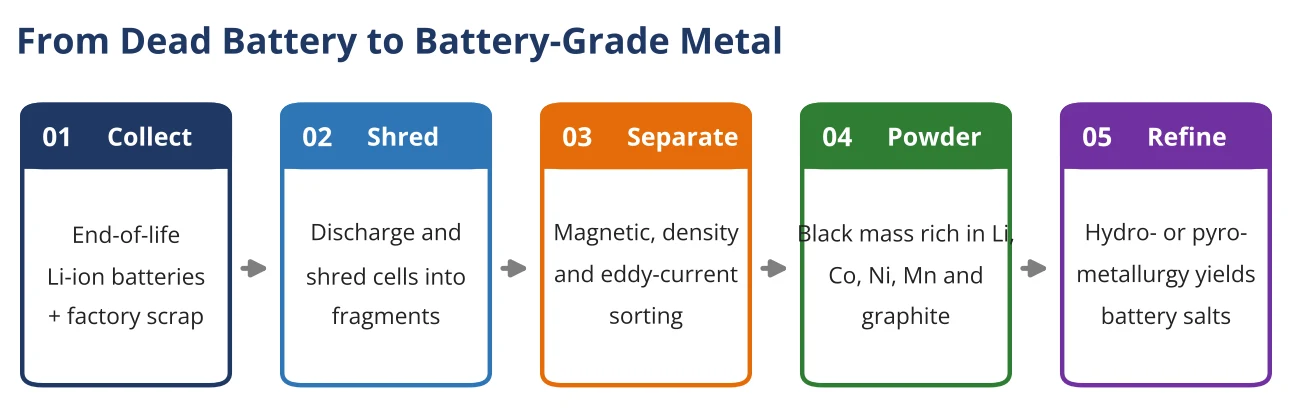
It is the dark powder left after end-of-life lithium-ion batteries and battery-factory scrap are shredded and sorted. It holds recoverable lithium, cobalt, nickel and manganese from the cathode, and graphite from the anode.
Why It Matters
- Critical mineral security: lithium, cobalt, nickel and graphite are among India’s 30 critical minerals; India imports most of them.
- Fits a larger plan: complements the ₹1,500 crore recycling incentive scheme (Cabinet, September 2025) under the National Critical Mineral Mission.
- Clean-energy supply chain: feeds EV, energy-storage and advanced chemistry cell manufacturing — Aatmanirbhar Bharat.
- Circular economy: ‘urban mining’ cuts reliance on primary mining and keeps a hazardous waste under Indian environmental rules.
Global Practice
Major economies are also retaining such material: the European Union treats black mass as hazardous waste (restricting its export outside the OECD), while China admits standard-compliant black mass as a resource rather than waste.
📖 Read More: Critical Minerals • Lithium • Electronic Waste (E-Waste) • PLI Scheme for ACC Battery Storage
6. Health Accounts 2023-24: Households Pay a Smaller Share
(SOCIAL JUSTICE) (PIB) The Union Health Ministry released the National Health Accounts (NHA) Estimates for India 2023-24. Government Health Expenditure has tripled in a decade, while the share of Out-of-Pocket Expenditure (OOPE) has fallen sharply.
About NHA
- What: tracks where India’s health money comes from, who manages it and who provides the services.
- Framework: the internationally recognised System of Health Accounts 2011.
- Who prepares: the NHA Technical Secretariat at the National Health Systems Resource Centre; 2023-24 is the 11th round.
Key Findings
| Indicator | 2013-14 | 2023-24 |
|---|---|---|
| Government Health Expenditure (GHE) | ₹1.30 lakh crore | ₹4.14 lakh crore |
| GHE share of Total Health Expenditure | 28.6% | 43.5% |
| OOPE share of Total Health Expenditure | 64.2% | 42.7% |
| Per capita GHE | ₹1,042 | ₹2,959 |
| Social security expenditure on health | 6% | 11% |
| Private health insurance | 3.4% | 10.2% |
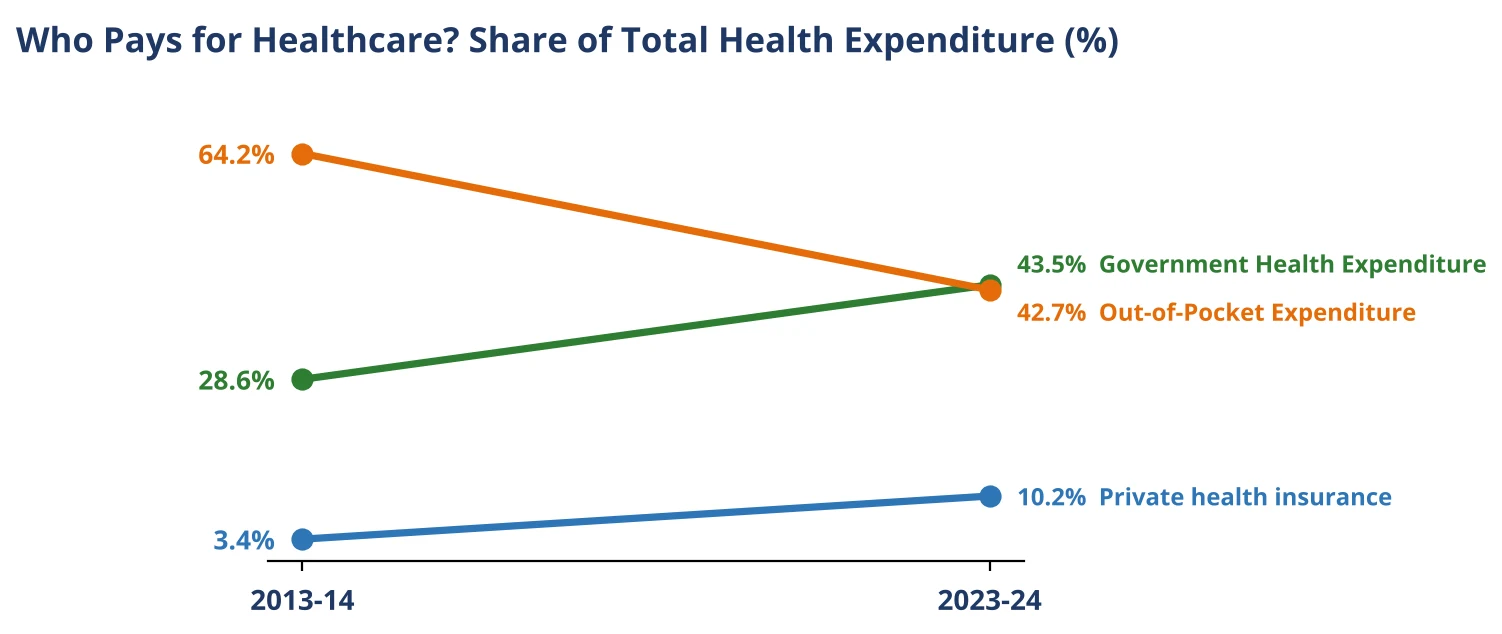
- Latest year: OOPE share fell from 43.4% in 2022-23 to 42.7% in 2023-24.
- Primary care: government spending on primary healthcare reached about ₹1.53 lakh crore, backed by Ayushman Arogya Mandirs.
- Drivers: AB PM-JAY, free drugs and diagnostics, Jan Aushadhi, AMRIT pharmacies, the PM National Dialysis Programme and drug price control by the NPPA.
Gaps That Remain
- Below target: public spending is still short of the National Health Policy 2017 goal of 2.5% of GDP by 2025.
- Absolute burden: with OOPE at 42.7% of a roughly ₹9.5 lakh crore health bill, households still pay about ₹4 lakh crore a year from their pockets.
- OPD gap: insurance mostly covers hospitalisation, while consultations, tests and medicines drive OOPE; a large ‘missing middle’ has no cover at all.
- Regional inequity: health is a State subject, and poorer States spend far less per head.
- Rising NCDs: diabetes, hypertension and heart disease will raise future costs unless prevention gets more money.
Way Forward
Raise GHE to 2.5% of GDP → Strengthen primary & preventive care → Cover OPD and the missing middle → Lower OOPE
Enforcing the Clinical Establishments (Registration and Regulation) Act, 2010 for transparent pricing, and scaling the Ayushman Bharat Digital Mission to cut duplicate tests, would make each rupee go further.
📖 Read More: Health and Nutrition • National Health Mission • AB PM-JAY • Ayushman Bharat Health Infrastructure Mission
7. PMJVM: Turning Forest Gatherers into Entrepreneurs
(SOCIAL JUSTICE) (PIB) As India marked Janjatiya Gaurav Diwas on 15 November 2026, the Pradhan Mantri Janjatiya Vikas Mission (PMJVM) was highlighted for helping tribal communities earn more from Minor Forest Produce (MFP).
Many of India’s 10.4 crore Scheduled Tribes earn 20–40% of their annual income from MFP such as honey, tendu leaves, mahua, tamarind, lac, bamboo and herbs. Yet they often sell to middlemen at distress prices, keeping only a small share of the final value.
About the Mission
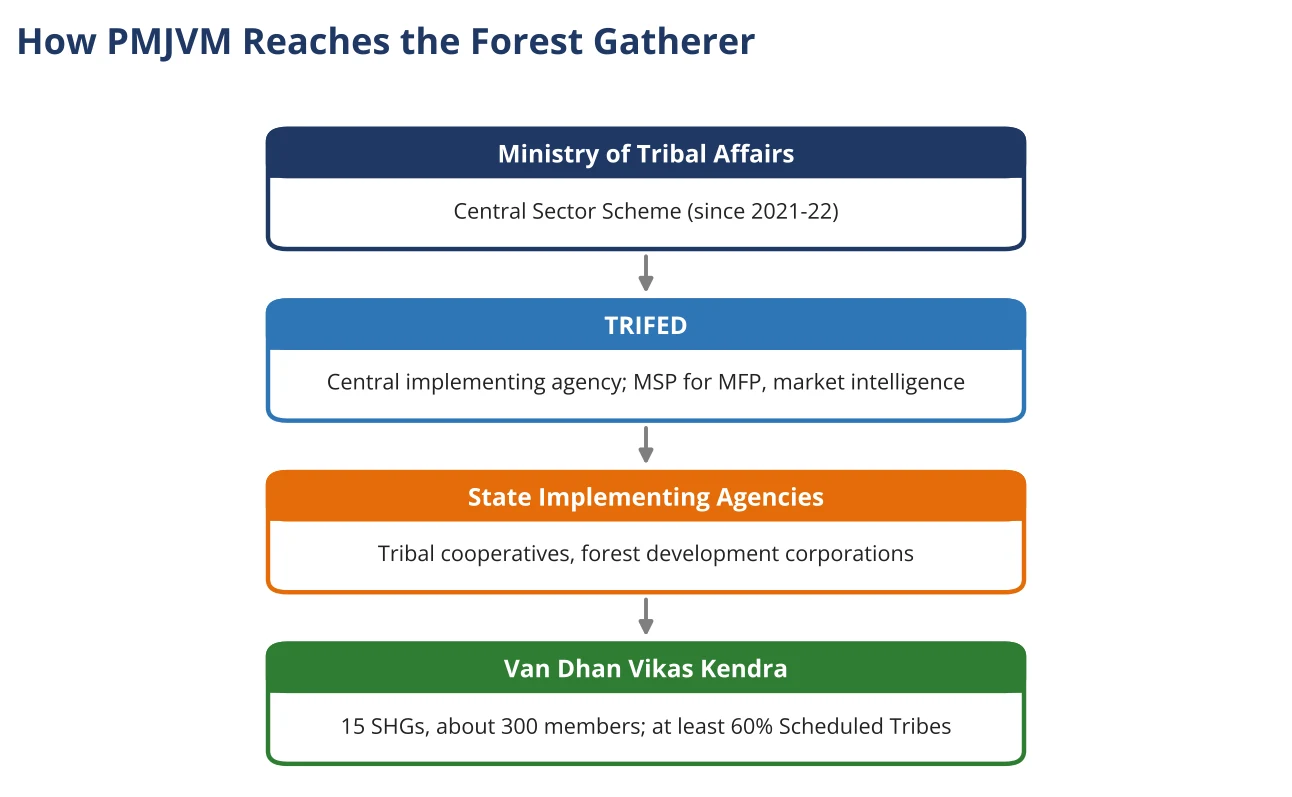
- Launched: 2021-22, as a Central Sector Scheme of the Ministry of Tribal Affairs.
- Aim: move gatherers from selling raw produce to running community-owned, value-adding enterprises.
- Implementing agency: TRIFED, working through State agencies such as tribal cooperatives and forest development corporations.
- Price protection: MSP notified for 87 MFP items; since 2013-14, States have procured 2,67,954 tonnes worth ₹693.98 crore.
Van Dhan Vikas Kendras (VDVKs)
- Structure: 15 Self-Help Groups of about 300 gatherers form one VDVK; at least 60% members must be STs.
- Roots: builds on the Van Dhan Yojana launched on 14 April 2018.
- Support: training in sustainable harvesting, processing kits (cutters, sieves, decorticators, dryers, packaging), working capital via banks and NSTFDC, rented storage and transport.
- Markets: VDVKs sit near Haat Bazaars (over 5,000 in tribal areas); branding, e-commerce, melas, geo-tagging and GI registration help sales.
- Scale: 4,172 VDVKs sanctioned covering 12.48 lakh members; 2,911 functional with sales of about ₹168 crore (31 July 2026).
Legal Backbone
| Law | Relevance to MFP |
|---|---|
| Forest Rights Act, 2006 | Recognises the right to collect, use and dispose of MFP — all non-timber forest produce of plant origin |
| PESA Act, 1996 | Gives Gram Sabhas/Panchayats ownership of MFP in Scheduled Areas |
Women at the centre: women do most MFP collection and sale. A women-led VDVK in Arunachal Pradesh’s Leparada district, set up in October 2021 with 300 members, makes King Chilli and bamboo-shoot pickles, spice powders and fruit squashes, and has sold about ₹11 lakh worth since 2022-23.
Janjatiya Gaurav Diwas 2026
- Observed on 15 November since 2021, the birth anniversary of Bhagwan Birsa Munda.
- The Janjatiya Gaurav Pakhwada (1–15 November) pushed last-mile delivery: 300+ projects (228 inaugurations, 74 foundation stones), the Jan-HIT Portal and the National FRA Digital Platform.
📖 Read More: Understanding Scheduled Tribes in India • Schemes under the Ministry of Tribal Affairs • Forest Rights and Conservation Strategies • PESA Act 1996
8. Perovskite Solar Cells: India’s Next Solar Bet
(SCIENCE AND TECHNOLOGY) (TH) As China tightens export controls on next-generation photovoltaic technology, perovskite solar cells are being pitched as a chance for India to build an independent, home-grown solar manufacturing chain.
What Are Perovskite Solar Cells?
They are photovoltaic cells whose light-absorbing layer is a metal-halide perovskite — a crystal with the general formula ABX₃ (A and B are cations, X an anion). The structure takes its name from the mineral perovskite (calcium titanate).
- Thin and strong absorbers: an active layer only a few hundred nanometres thick — about a thousand times thinner than a silicon wafer.
- Low-temperature processing: can be made at below about 200 °C, unlike energy-hungry silicon refining.
- Tunable band gap: composition can be tweaked to absorb different parts of sunlight, ideal for stacking on silicon in tandem cells.
| Feature | Crystalline Silicon | Perovskite |
|---|---|---|
| Absorber thickness | Wafers of roughly 100–200 μm | A few hundred nanometres |
| Processing | High-temperature, energy-intensive | Low-temperature, solution-based |
| Form | Rigid, heavy | Lightweight, can be flexible |
| Maturity | Proven 25+ year field life | Durability and lead content still being solved |
Significance for India
- Self-reliance: reduces dependence on imported cells and wafers, strengthening energy security (see solar energy).
- Jobs and skills: a new high-tech manufacturing base and research ecosystem (see advanced materials).
- Climate goals: cheaper, lighter modules for rooftops and building facades support the net-zero transition.
Hurdles
- Stability: perovskites degrade with moisture, heat and light faster than silicon.
- Toxicity: most efficient versions contain lead, needing safe encapsulation and recycling.
- Testing: national certification and testing facilities, plus early government backing, are needed to make modules bankable.
📖 Read More: Solar Energy • Advanced Materials • Measures to Boost Renewable Energy • Energy Technologies
9. India Co-Partners Italy’s Elettra 2.0 Synchrotron
(SCIENCE AND TECHNOLOGY) (PIB) India has committed over €7 million over five years from 2026-27 as a co-partner in redeveloping research beamlines under the Elettra 2.0 programme at Elettra Sincrotrone Trieste, Italy. The announcement was made on 13 November 2026.
Key Concepts
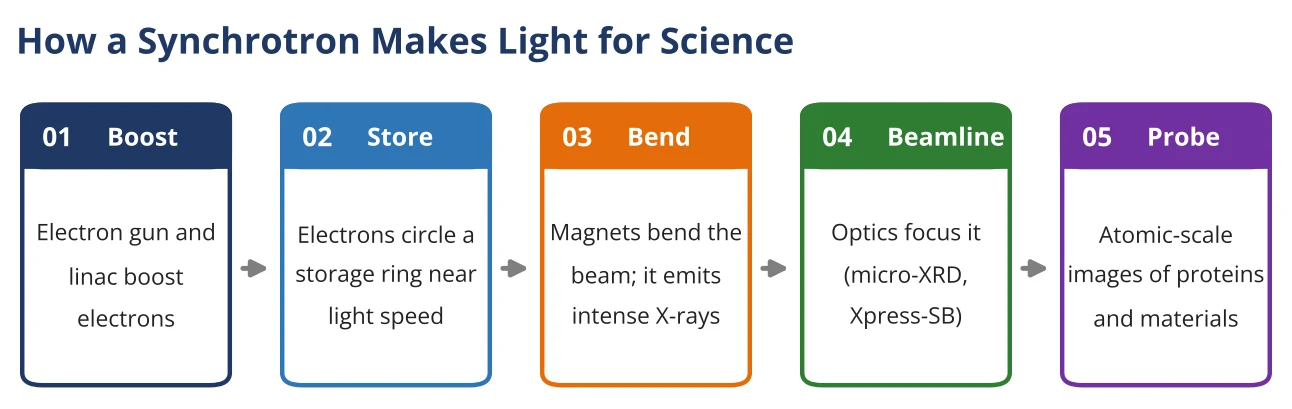
- Synchrotron radiation: intense electromagnetic radiation — from infrared to X-rays — emitted when electrons moving near the speed of light are bent by magnetic fields.
- Beamline: the optical and experimental line that guides, focuses and conditions this light onto a sample.
- Elettra 2.0: upgrade of the existing third-generation storage ring into a fourth-generation, low-emittance light source with brighter, more coherent beams.
India’s Role
| Aspect | Details |
|---|---|
| Old beamlines | XRD2 and XPRESS, built with about ₹22 crore from DST and inaugurated on 20 October 2016 |
| New beamlines | Micro-XRD (μXRD) for macromolecular (protein) crystallography; Xpress Superbend (Xpress-SB) for high-pressure diffraction |
| User base | Indians have used Elettra since 1998; India is its second-largest user after Italy, with 1,100+ proposals |
| Researcher support | EPOC 2022-24: ₹2 crore for about 50 researcher visits a year; EPOC 2025-27: proposed ₹1.5 crore |
Why It Matters
- Gives Indian scientists access to world-class tools for drug discovery, proteins, batteries, solar cells, semiconductors and high-pressure physics.
- Builds human capacity ahead of any Indian synchrotron upgrade, and deepens India–Italy science and technology diplomacy.
- Elettra also runs FERMI, a free-electron laser producing ultrashort pulses for studying ultrafast processes.
📖 Read More: Waves and Electromagnetic Radiation • Particle Physics • Science and Technology Diplomacy • India and Europe
10. Indian Bramble Shark: A New Deep-Sea Species
(ENVIRONMENT) (PIB) Scientists of the Zoological Survey of India (ZSI) and ICAR-CMFRI have described a new deep-sea shark, Echinorhinus roinee — the Indian Bramble Shark — which had been misidentified for decades as the Atlantic bramble shark.
Key Features
- Size and look: up to 3 metres; dark brown to black body studded with thorn-like dermal denticles that fuse into multi-pointed plates with age.
- Habitat: continental-slope waters at 350–450 metres.
- How it differs: larger eyes, larger pelvic fins and a longer snout-to-gill region; mitochondrial DNA barcoding confirms a distinct Indian Ocean lineage.
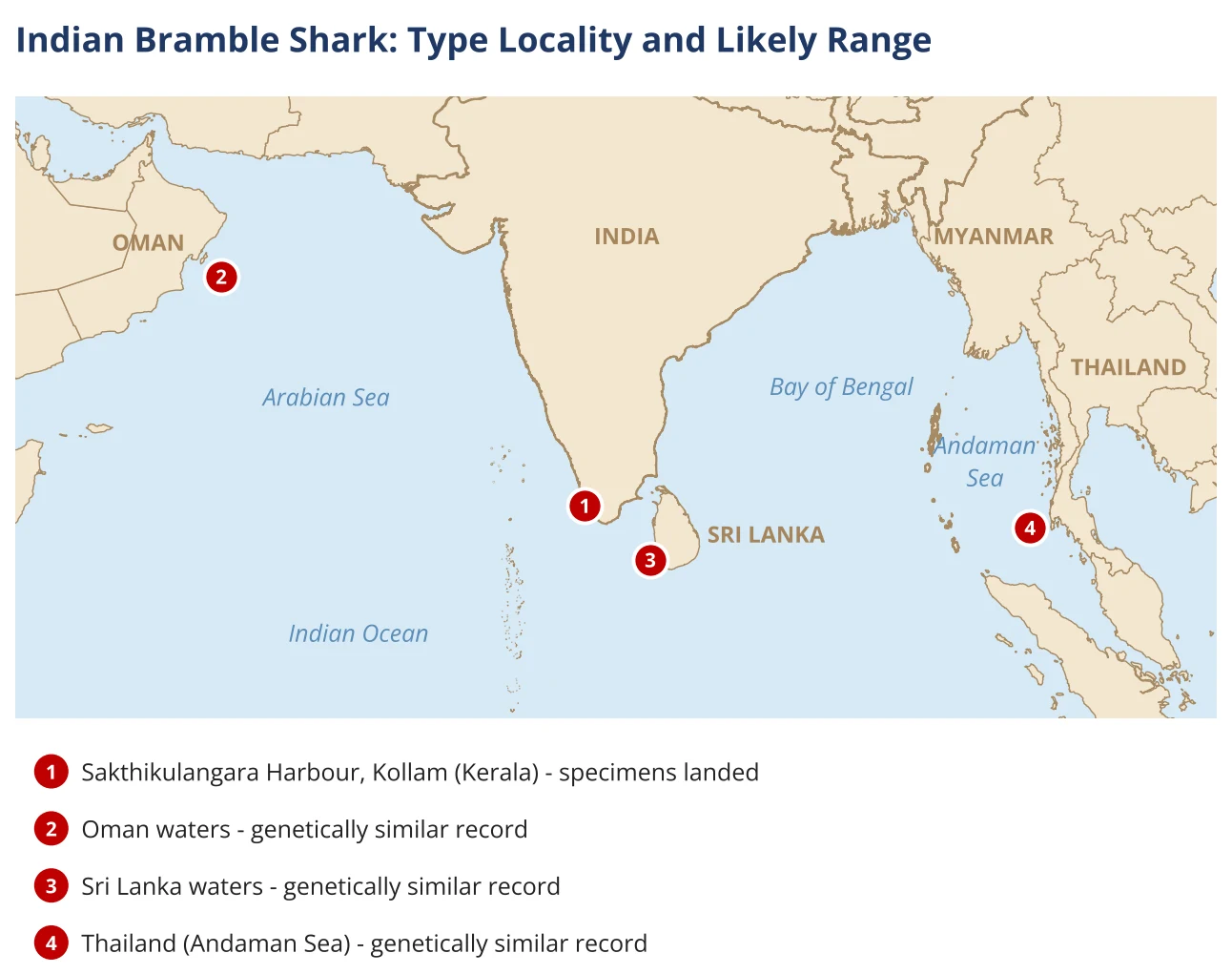
- Discovery: specimens came as shrimp-trawl bycatch landed at Sakthikulangara harbour, Kollam (Kerala); described in Records of the Zoological Survey of India (2026).
The Bramble Shark Family
| Species | Common Name | Region |
|---|---|---|
| Echinorhinus brucus | Atlantic bramble shark | Atlantic (assessed Endangered by IUCN) |
| Echinorhinus cookei | Prickly shark | Pacific |
| Echinorhinus roinee | Indian bramble shark | Indian Ocean (not yet assessed) |
Conservation Significance
- Correct naming yields species-specific bycatch data to set deep-sea trawl limits for slow-growing, low-fecundity sharks vulnerable to overfishing.
- The study was funded under India’s Deep Ocean Mission; type specimens are kept at ZSI’s Marine Biology Regional Centre, Chennai.
- It underlines how much of India’s deep-sea biodiversity remains undocumented.
📖 Read More: Species of Conservation Concern • India’s Deep Ocean Mission • Aquatic Ecosystems • Fishing Industry
11. Kasaragod Revives Its Surangam Water Tunnels
The Project
- Panchayats: Kayyur-Cheemeni, Kodom-Belur, Kallar, Pallikkara, Bedadka, Puthige, Chengala and Kumbla.
- Labour: workers under VB-G RAM G — the rural employment scheme that replaced MGNREGS.
- Technical support: the Central Ground Water Board will guide restoration and recharge planning.
What Is a Surangam?
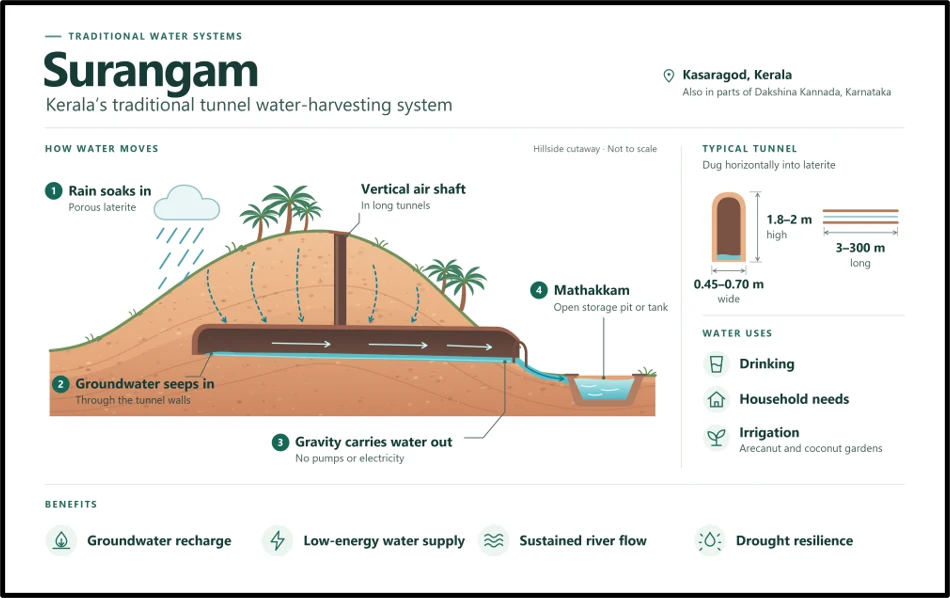
A Surangam is a horizontal tunnel dug into a laterite hillside. Rainwater soaks into the porous laterite, seeps into the tunnel and flows out by gravity alone — no pumps or power needed. The word comes from the Kannada term for tunnel.
Rain on laterite hill → Percolation → Seepage into tunnel → Gravity outflow → Mathakkam (storage pit) → Drinking & irrigation
| Feature | Details |
|---|---|
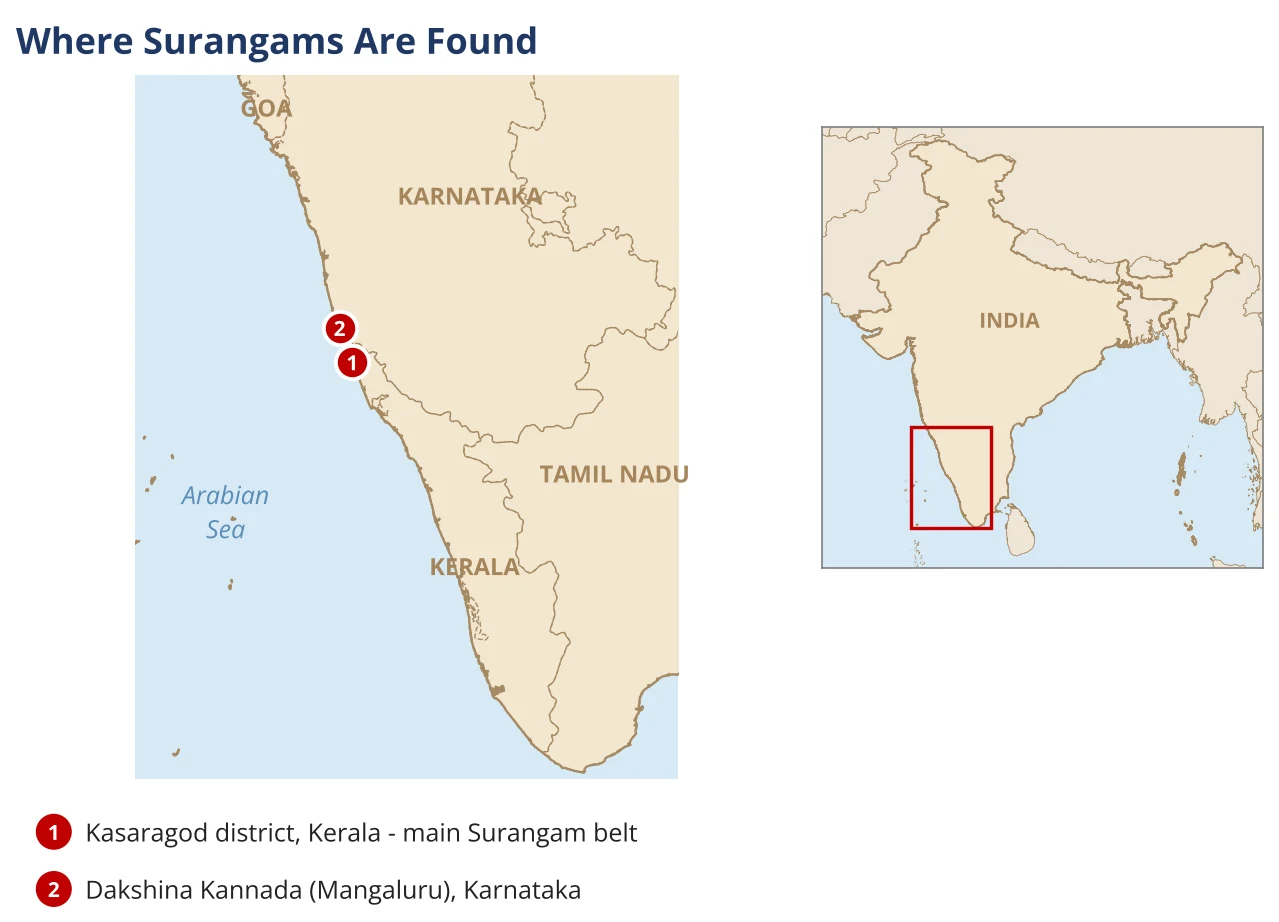
| Where | Mainly Kasaragod (Kerala) and parts of Dakshina Kannada (Karnataka) — laterite-rich, undulating terrain |
| Local names | Thurangam, Thorapu, Mala |
| Size | About 0.45–0.70 m wide, 1.8–2 m high, 3–300 m long; long tunnels have vertical air shafts |
| Storage | Water collected in an open pit or pond, sometimes called a Mathakkam |
Significance: a low-energy, sustainable water supply that shows the value of indigenous knowledge — a cousin of the Persian qanat. Reviving it complements watershed management and drought-proofing efforts.
📖 Read More: Water Conservation • Laterite Soils • VB-G RAM G • Watershed Management
12. Nehru at 137: Architect of Modern India
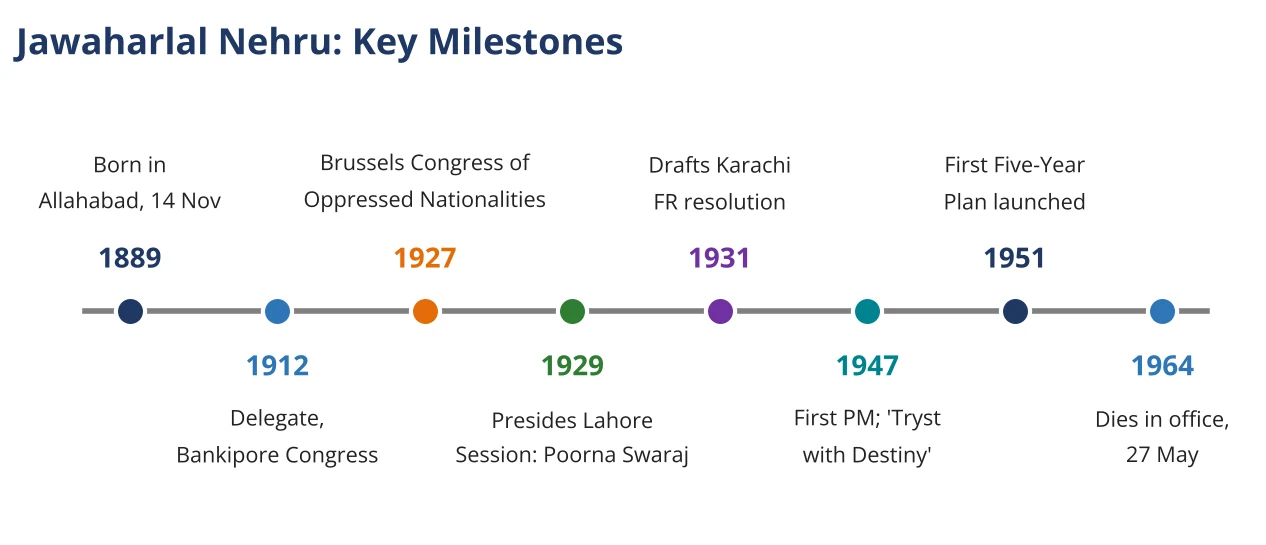
(HISTORY) (TH) India marked the 137th birth anniversary of Jawaharlal Nehru (14 November 1889 – 27 May 1964), the country’s first Prime Minister, on 14 November 2026, also celebrated as Children’s Day.
In the Freedom Struggle
- Attended the Bankipore Congress (1912) as a delegate; opposed the Rowlatt Act and joined the Non-Cooperation Movement.
- Represented India at the Congress of Oppressed Nationalities, Brussels (1927); associated with the Nehru Report (1928) but pressed for complete independence over Dominion Status.
- As Congress President at Lahore (1929), oversaw the Poorna Swaraj resolution.
- Drafted the Fundamental Rights and Economic Programme resolution for the Karachi Session (1931).
- Second Individual Satyagrahi after Vinoba Bhave (1940); jailed repeatedly, including during the Quit India Movement.
Nation-Builder
| Area | Contribution |
|---|---|
| Democracy | Guided the first general elections (1951-52) after the Election Commission was set up in 1950 |
| Planning | Launched the First Five-Year Plan (1951) with focus on agriculture, irrigation and food security |
| Science | IITs, AIIMS and research labs; INCOSPAR under Vikram Sarabhai laid ISRO’s foundation (see space programme) |
| Industry | Bhakra-Nangal dam; steel plants at Bhilai, Durgapur, Rourkela; planned city of Chandigarh |
| Foreign policy | Held External Affairs till death; Asian Relations Conference (1947), Panchsheel, a founder of Non-Alignment |
Nehru’s ‘Tryst with Destiny’ speech on the eve of independence framed a vision of a secular, democratic, scientific and welfare-oriented republic. See post-independence foreign policy.
Children’s Day and Child Rights
- Before 1964, India observed Children’s Day on 20 November; after Nehru’s death his birthday was adopted. He also set up the Children’s Film Society, India (1955).
- Article 21A (free and compulsory education, 6–14 years), Article 24 (no child labour in hazardous work), Article 39(f) and Article 45 (early childhood care) underpin the RTE Act 2009, POCSO Act 2012 and Juvenile Justice Act 2015.
📖 Read More: Poorna Swaraj • Nehru Report • Five-Year Plans • Post-Independence Political History